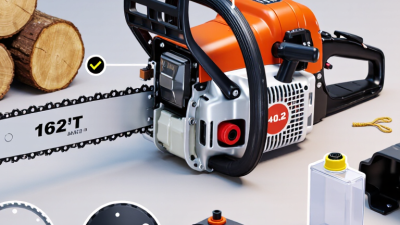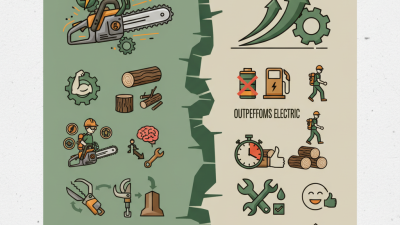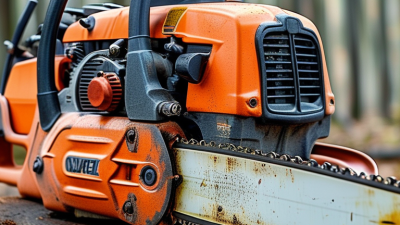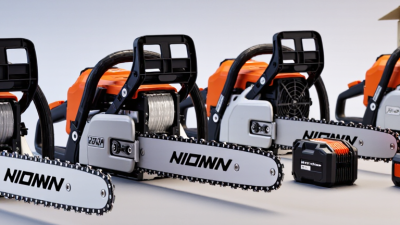
Choosing a Gasoline Chain Saw 40.2cc is not just a matter of matching engine size to a job. Displacement offers a useful starting point, but it does not reveal the saw’s balance, cutting speed, vibration, or ease of maintenance. Not the whole story. A machine that feels manageable in a shop may feel tiring after an hour of bucking firewood.
Reliable selection begins with the work itself. Consider typical branch diameter, hardwood versus softwood, how often you will cut, and whether you need to move the saw between sites. Then compare bar length, power-to-weight feel, chain-brake design, anti-vibration features, and access to replacement parts. The U.S. Forest Service’s chain-saw training materials emphasize safe handling and cutting practices; NIOSH’s Preventing Injuries from Chain Saws (Publication No. 96-119) also addresses recognized injury hazards. These sources are useful reminders that control and training matter as much as engine capacity.
For injury context, the U.S. Consumer Product Safety Commission’s National Electronic Injury Surveillance System tracks emergency-department-treated product injuries, including chainsaw-related cases. Such data can describe injury patterns, but it cannot certify one model as safe for every user. Check the manufacturer’s manual, verify that the recommended bar and chain match your intended work, and assess whether the saw’s weight feels controllable with protective equipment on. I would not choose by cc alone; it is a tempting shortcut, and an incomplete one.

When assessing a 40.2cc gasoline chain saw, confirm that the engine displacement is listed as 40.2 cm³ in the manual or technical specification sheet. Displacement describes the cylinder’s swept volume, not the saw’s cutting speed or power. Check that the figure belongs to the exact model and configuration you are considering. Small differences in model codes can matter.
Then review rated-power data measured under ISO 7293, ideally with the power stated in kilowatts and the test speed in revolutions per minute. The standard provides a method for determining chain-saw engine power and fuel consumption, making documented figures more useful than vague claims. Look for a test report or clear specification, and check whether the stated value is maximum or rated output. Numbers can mislead. A higher power figure alone does not guarantee faster cutting; chain condition, wood type, and operator technique also affect performance. If the documentation omits test conditions, ask for clarification. A specification sheet can be incomplete, and I would not treat an unexplained number as proof. Compare verified data, not just the largest figure on the page.
How to Choose a 40.2cc Gasoline Chain Saw?
Match the bar to the work, not just the engine size. A 16- to 18-inch bar is common on saws in this class, but the approved range in the saw’s manual comes first. Longer bars add cutting reach and resistance; in dense wood, they can slow the cut and tire your arms. USDA Forest Products Laboratory’s Wood Handbook (2021) documents substantial variation in wood properties among species. A dry pine limb and a wet hardwood log do not load a chain equally. Be realistic about the wood you cut most often.
Pitch and gauge must match the bar, chain, and drive sprocket. Pitch is the spacing between chain rivets; common options include 3/8-inch and .325-inch. Typical chain gauges are .043, .050, .058, and .063 inch. Check the markings on your existing bar and chain before buying replacements. Close is not compatible. Fit matters. A mismatch may bind, wear parts, or create an unsafe setup. I would also question any recommendation based only on engine displacement: check the manual’s approved combinations, then consider typical log diameter and how often you cut. An extra inch of bar can look useful on paper, but it is not automatically better in the wood.
For a 40.2cc gasoline chain saw, compare chain speed only when the figures use the same measurement conditions. A higher speed, stated in metres per second, can support faster cutting, but chain sharpness, wood type, and engine load also matter. ISO 7293:1997 sets out methods for measuring portable chain-saw engine performance and fuel consumption. Check whether the listed power and consumption figures follow a consistent test method.
The spec sheet can mislead. A fast chain is less useful if the saw feels tiring to control.
Fuel capacity affects how often you stop, not a guaranteed number of minutes per tank. Actual runtime changes with cutting pressure, wood hardness, and maintenance. Compare tank volumes, then treat runtime claims cautiously.
Weight-to-power ratio offers another useful check: divide the saw’s operating weight in kilograms by rated power in kilowatts. For example, a hypothetical 5.0 kg saw producing 1.5 kW equals 3.33 kg/kW; a lower figure means less weight per unit of power. Confirm whether listed weight includes the bar, chain, and fuel.
ANSI/OPEI B175.1 addresses chain-saw safety requirements, but it does not replace hands-on assessment. If possible, hold the saw with its typical cutting equipment fitted. Balance can feel different than the numbers suggest.
How to Choose a 40.2cc Gasoline Chain Saw?
Verify Chain-Brake Protection Under OSHA 29 CFR 1910.266
A 40.2cc saw may suit pruning, firewood, or light clearing, but engine size says little about brake protection. OSHA 29 CFR 1910.266 covers logging operations and requires covered chain saws to have a chain brake and chain catcher. Check whether that standard applies to your work; it is not a blanket rule for every private cutting task. Small detail. It matters.
Before buying, confirm the brake is present and inspect its guard for cracks, looseness, or damage. Follow the operating manual for a safe function check on stable ground, with proper protective equipment and a clear work area. The chain should stop when the brake is engaged. Do not judge it by a sharp click alone. A click is not proof.
Also check that the chain catcher is installed, since it can help limit chain movement if the chain comes off. Ask the seller for the manual and maintenance history, especially for a used saw. OSHA requires covered saws to be maintained and operated according to the manufacturer’s instructions. A new machine can still have a setup issue, and a brake is not a substitute for sound cutting technique. I would rather pause over an awkward brake test than assume the mechanism is ready.
When choosing a 40.2cc gasoline chain saw, compare measured noise and vibration, not engine size alone. ISO 22868 sets a test method for noise from portable, engine-powered forestry machines. ISO 22867 specifies how handle-transmitted vibration is measured. Look for values tested to these standards, and check whether the figures describe sound pressure, sound power, or vibration at each handle.
The details matter. Sound pressure near the operator helps estimate exposure; sound power describes the machine’s overall sound output. The NIOSH report Criteria for a Recommended Standard: Occupational Noise Exposure recommends an 85 dBA limit over eight hours, with exposure time halved for each 3 dB increase. A laboratory result does not predict your exact workday. Cutting dense wood, for example, can change operating time and exposure.
For vibration, compare front- and rear-handle acceleration in m/s², then consider expected daily use. The UK Health and Safety Executive sets 2.5 m/s² A(8) as its exposure action value and 5.0 m/s² A(8) as its limit value; these are jurisdiction-specific benchmarks, not ISO ratings. Lower readings can help, but technique, maintenance, and cutting conditions still affect exposure. A tidy specification sheet can feel reassuring. It is not the whole picture.
Use this checklist to compare declared emission values for 40.2cc gasoline chain saws. Enter figures from each saw’s test report or technical documentation; the standards describe measurement methods and do not set a universal pass/fail rating.
| Comparison dimension | Data to check | Unit or method | How to use it when choosing |
|---|---|---|---|
| Engine displacement | Confirm that the stated engine displacement is 40.2 cubic centimetres. | cm³ (cc) | Check the product specification and test documentation. Displacement alone does not establish noise, vibration, cutting performance, or suitability for a particular task. |
| Sound pressure at the operator position | Record the declared A-weighted emission sound pressure level and whether the report gives a measurement uncertainty. | dB(A); test method: ISO 22868 | This value relates to sound at the operator position under the standard’s test conditions. Compare values reported on the same basis. It is an emission value, not a guarantee of the noise level during every job. |
| Sound power level | Record the declared A-weighted sound power level and any stated uncertainty. | dB(A); test method: ISO 22868 | Sound power describes the machine’s overall sound emission under test conditions; it is not the same as sound pressure at the operator’s ear. Do not compare the two measures as if they were interchangeable. |
| Front-handle vibration | Record the declared frequency-weighted vibration emission value for the front handle. | m/s²; test method: ISO 22867 | For a like-for-like comparison, check that the values use the same test method and are reported for the same handle location. A lower declared emission value can help in comparing models but does not by itself determine an individual operator’s daily exposure. |
| Rear-handle vibration | Record the declared frequency-weighted vibration emission value for the rear handle. | m/s²; test method: ISO 22867 | Compare rear-handle values separately from front-handle values. Do not substitute one handle’s figure for the other when assessing a saw. |
| Test documentation | Check the cited ISO 22868 and ISO 22867 test methods, the applicable editions, the tested configuration, and any reported uncertainty. | Test report or technical declaration | Use documentation that clearly identifies the tested chain saw configuration. Values from different configurations or test conditions may not be directly comparable. |
| Workplace exposure and protection | Consider actual operating time, work conditions, maintenance, and suitable hearing and vibration-risk controls. | Exposure depends on use; emission ratings are not personal exposure measurements. | Do not treat a test emission value as a safe-use guarantee. Follow the operating instructions and applicable workplace health and safety requirements; assess exposure for the actual task and duration. |
Comparison record: Front-handle vibration: ______ m/s² | Rear-handle vibration: ______ m/s² | Operator-position sound pressure: ______ dB(A) | Sound power: ______ dB(A). Fill in each blank from the relevant test documentation rather than estimating values.