
7 Tips for Buying a Gasoline Chain Saw 40.2cc
Choosing a Gasoline Chain Saw 40.2cc requires more than comparing engine numbers. A 40.2cc engine can offer useful cutting power for firewood, storm cleanup, and regular property maintenance. However, performance depends on chain sharpness, bar length, fuel quality, and operator control. A larger engine is not automatically better. It may feel heavy after several minutes.
Certified arborist and chainsaw trainer Mark Chisholm has emphasized, “A chainsaw is only as effective as the person controlling it.” That principle matters when examining safety features, including a responsive chain brake, a clear hand guard, an accessible stop switch, and an effective anti-vibration system. Hold the saw before buying it. Check whether the rear handle feels stable and whether the controls work naturally with gloves.
This guide examines seven practical buying points for a Gasoline Chain Saw 40.2cc. They include engine performance, power-to-weight balance, compatible bar length, starting convenience, fuel consumption, maintenance access, and after-sales support. Look closely at the air filter cover, tensioning system, spark plug access, and replacement-chain availability. Small details matter beside a woodpile.
Still, specifications can mislead. A claimed power figure does not explain balance in real use. I once focused too heavily on engine size and ignored vibration. That was a poor judgment. Consider your cutting tasks, physical strength, storage conditions, and maintenance habits. A dependable saw should start predictably, cut smoothly, and remain manageable when the work becomes tiring. Safety training and protective equipment remain essential. Specs help, but hands-on judgment matters more.
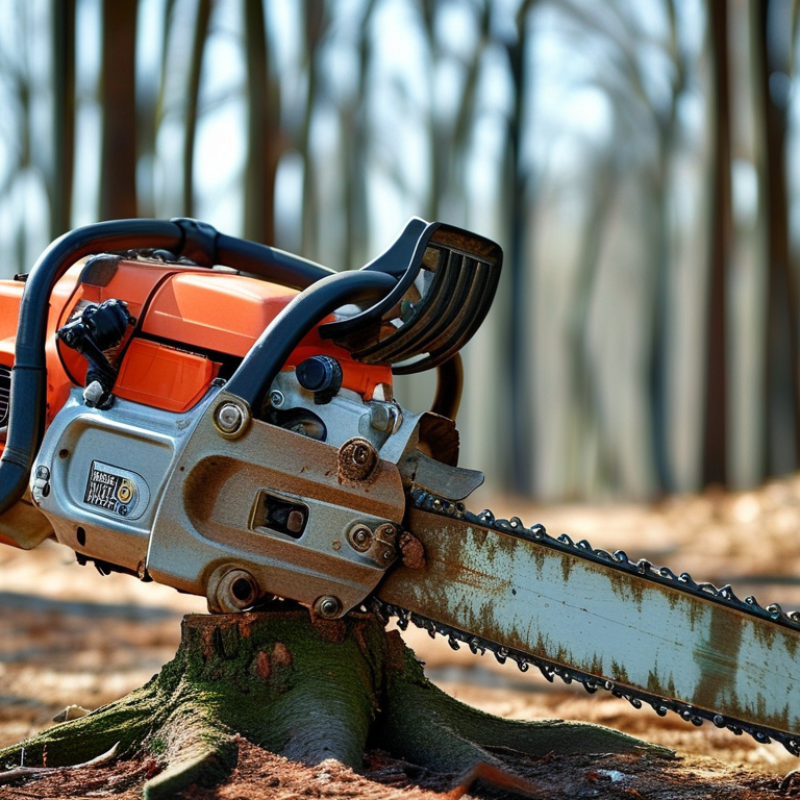
Define the Cutting Needs for a 40.2cc Gasoline Chain Saw
Buying a 40.2cc gasoline chain saw starts with defining the work, not choosing a model. Measure the usual branch or log diameter. Note the wood species, cutting frequency, and working environment. A 40.2cc engine suits pruning, storm cleanup, firewood preparation, and small-to-medium logs. It may feel underpowered for repeated cuts through thick hardwood.
Cutting conditions matter.
Softwood cuts faster than dense hardwood. Wet, dirty, or frozen wood increases chain wear and demands more engine effort. A suitable guide bar should match the saw’s power, usually within the manufacturer’s recommended range. An oversized bar can reduce cutting speed and increase fatigue. That detail is easy to overlook.
Think about handling, too. If you work from the ground, balanced weight and low vibration can improve control. For occasional property maintenance, simple starting and accessible maintenance are valuable. Frequent users should inspect the air filter, chain tension, lubrication, and fuel system regularly. Use protective equipment and follow local operating rules. Never cut beyond your training or visibility. My own planning would be conservative: choose capacity for the largest regular task, not the biggest tree seen once. A larger saw can seem reassuring, but unnecessary weight may make routine cutting slower and less precise.
7 Tips for Buying a Gasoline Chain Saw 40.2cc - Define the Cutting Needs for a 40.2cc Gasoline Chain Saw
A practical buying guide based on typical specifications and operating requirements for gasoline chain saws around 40.2cc.
| Tip | Buying Dimension | Typical Data for a 40.2cc Gasoline Chain Saw | Best Application | What to Check Before Buying |
|---|---|---|---|---|
| 1 | Define the Cutting Needs | Recommended material: branches and small-to-medium logs up to approximately 25–35 cm in diameter | Tree pruning, storm cleanup, firewood preparation, and occasional property maintenance | Choose a larger saw for frequent cutting of hardwood logs above 35 cm or for continuous professional forestry work. |
| 2 | Select the Guide Bar Length | Common bar range: 35–40 cm (14–16 in) | A 35 cm bar offers easier handling; a 40 cm bar provides greater cutting reach when the engine is properly maintained. | The usable bar length should match the cutting diameter. Avoid fitting an excessively long bar, which can reduce cutting performance and increase operator fatigue. |
| 3 | Check Engine Output and Fuel Use | Displacement: 40.2cc; typical maximum output: approximately 1.5–1.8 kW; fuel tank capacity: about 0.35–0.45 L | Short- to medium-duration cutting jobs where mobility and independence from electrical power are important | Confirm the rated power, fuel-tank capacity, fuel mixture requirement, and whether the engine is designed for the intended workload. |
| 4 | Match the Chain Configuration | Common chain pitch: 3/8 in low-profile or .325 in; typical gauge: 1.3 mm or 1.5 mm | Low-profile chains are suitable for lighter cutting; .325 in chains can provide stronger cutting performance on a compatible setup. | Pitch, gauge, guide bar, drive sprocket, and replacement chain must be compatible. Never mix components with different specifications. |
| 5 | Evaluate Weight and Balance | Typical dry power-unit weight: approximately 4.5–5.5 kg, excluding the bar, chain, fuel, and oil | Ground work, pruning, and intermittent cutting where carrying comfort and control matter | Check the complete operating weight, front-to-rear balance, handle comfort, anti-vibration system, and ease of starting before purchase. |
| 6 | Verify Safety and Maintenance Features | Important features: chain brake, throttle lockout, chain catcher, hand guard, automatic chain lubrication, and tool-accessible filter | Routine outdoor cutting with frequent starts, stops, transport, and maintenance | Inspect the chain-brake operation, safety labeling, chain-tension adjustment, air-filter access, spark-plug access, and replacement-part availability. |
| 7 | Consider Noise, Emissions, and Operating Conditions | Typical sound-pressure level: roughly 100–105 dB(A) at the operator position; gasoline two-stroke engines require correct fuel mixing | Outdoor use in areas where noise, exhaust, and local operating restrictions must be considered | Use hearing and eye protection, follow the specified fuel ratio, allow the engine to cool before refueling, and check local rules for emissions and noise. |
| Data shown are typical ranges for gasoline chain saws around 40.2cc. Actual performance depends on wood species, chain sharpness, bar length, fuel mixture, maintenance, temperature, and operator technique. | ||||
Related Posts
-
How to Choose the Best Gasoline Chain Saw?
-

Top China Chainsaw Tips for Global Buyers in 2026?
-
Top China Chainsaw Manufacturers for Global Buyers?
-
Why Choose Gasoline Chain Saw for Your Next Project?
-

10 Essential Tips for Using the Ms880 Chainsaw Effectively?
-
China Top Petrol Chain Saw Brands for Efficient Outdoor Power Tools?


