Choosing the best Gasoline Chain Saw requires more than comparing engine size or bar length. A saw that feels powerful in a showroom may become tiring after an hour of limbing. Weight, vibration, balance, starting effort, and service access shape real field performance. That matters.
The U.S. Consumer Product Safety Commission has cited roughly 36,000 chainsaw-related injuries treated in emergency departments annually. This figure makes protective equipment, chain-brake response, and operator control essential selection criteria. The Occupational Safety and Health Administration also emphasizes training, inspection, personal protective equipment, and safe cutting procedures for professional work. A reliable choice must support these practices, not encourage rushed cutting.
Emissions and fuel use deserve attention too. The U.S. Environmental Protection Agency regulates emissions from small spark-ignition engines, including many gasoline-powered outdoor tools. Meanwhile, guidance from the Outdoor Power Equipment Institute stresses correct chain tension, approved fuel handling, and routine maintenance. Fuel is not free. A larger engine may cut faster, but it can consume more fuel and increase fatigue. Smaller models may feel manageable, yet they can struggle with hardwood or larger diameters.
This guide compares power, displacement, guide-bar length, anti-vibration design, starting systems, maintenance needs, and manufacturer support. I would not claim one model suits everyone. My own evaluation would also change with wood species, climate, cutting frequency, and operator experience. Even published specifications can feel different in the hands. The best Gasoline Chain Saw is therefore the safest, most controllable, and appropriately powered tool for the work actually planned.
The best gasoline chain saw begins with a clear cutting plan, not the largest engine available. Pruning small limbs requires a lighter saw and precise handling around branches. Felling mature trees demands more power, a longer guide bar, and stable control. For bucking logs into firewood, balance matters because repeated cuts quickly expose vibration and fatigue. Storm-damaged wood is unpredictable; hidden tension can pinch the chain without warning. Work slowly.
Wood species changes the workload. Softwoods such as pine usually cut faster and produce lighter chips. Dense hardwoods, including oak and maple, need a sharp chain and steady engine torque. Dry, seasoned logs can be abrasive, especially when dirt has entered the bark. Frozen timber may feel unusually hard and can reduce cutting speed. Measure the typical diameter, then choose a guide bar that extends slightly beyond it. A bar that is too long adds weight; one that is too short encourages awkward cutting angles.
In practical use, I match saw size to the largest regular task, not an occasional oversized log. I once selected a powerful saw for small pruning and underestimated its fatigue after an hour. That mistake changed my preference toward balanced equipment and realistic work periods. Check the owner’s manual, chain condition, fuel requirements, and maintenance schedule before cutting. Wear approved protective equipment and keep bystanders outside the work area. When wood conditions change, stop and reassess.
Match the saw to the cutting task, wood type, and average trunk or branch diameter. The chart uses representative engine-displacement values within practical ranges: smaller engines suit pruning and softwood firewood, while dense hardwood and medium-tree felling require more power and longer guide bars. Actual selection should also consider operator experience, cutting diameter, saw weight, and safety equipment.
Choosing a gasoline chain saw starts with matching engine power to your real workload. Engine size, measured in cubic centimeters, influences torque and cutting speed. Smaller engines suit pruning and light firewood. Mid-range engines handle thicker logs without feeling unnecessarily heavy. Large engines work well for sustained cutting, but they require more fuel, strength, and maintenance. More power is not always better. A powerful saw with a short bar can feel awkward in tight spaces. I would judge the wood first, not the biggest number.
Bar length should extend slightly beyond the wood’s diameter. For a 12-inch log, a 14- or 16-inch bar may provide practical control. Longer bars reach deeper, yet they add weight and increase kickback exposure. Shorter bars usually feel quicker during limbing. Real cutting positions matter. A comfortable balance can matter more than two extra inches. Always use both hands and maintain a clear escape path.
Chain compatibility is a specification check, not a guess. Match pitch, gauge, and drive-link count with the bar and drive sprocket. Common pitch sizes include 3/8-inch and .325-inch, but appearance can mislead. A loose chain may derail, while an overly tight chain can overheat. Check the bar stamp and saw manual before ordering. I have seen buyers focus on engine power, then discover the replacement chain was wrong. That mistake is avoidable, though manuals can be surprisingly unclear. Measure twice. Replace worn components together when needed.
How to Choose the Best Gasoline Chain Saw?
Choosing the best gasoline chain saw starts with your body, not the engine label. In field evaluations, I lift each saw with a full fuel tank. A light dry weight can become tiring after refueling. Aim for a neutral grip, with the guide bar aligned to your forearm. The front handle should support relaxed shoulders. If the nose repeatedly drops, the balance may be wrong for your cutting style. Small details matter.
Vibration deserves measured attention. ISO 5349-1 provides methods for assessing hand-transmitted vibration. EU Directive 2002/44/EC sets an action value of 2.5 m/s² A(8) and a limit value of 5.0 m/s². These figures are not comfort scores. They are exposure benchmarks.
Ask for declared vibration data, then compare similar cutting conditions. Anti-vibration mounts can help, but worn handles, a loose chain, or poor sharpening may increase shaking. I have seen a technically impressive saw feel harsh after one careless maintenance interval.
Operator comfort also includes noise, controls, and recovery. NIOSH recommends limiting occupational noise exposure to 85 dBA over eight hours, using a 3 dB exchange rate. A saw that feels smooth for five minutes may punish the wrists later. Test the throttle lock, chain brake, and starting position with gloves. Walk a short loop while carrying it. My mistake was judging comfort while standing still. Real work includes slopes, awkward cuts, and repeated starts. Choose the saw you can control calmly, not the one that only feels powerful in a showroom.
How to Choose the Best Gasoline Chain Saw?
A gasoline chain saw should feel predictable before it feels powerful. Check the chain brake, throttle lock, hand guards, and anti-vibration system. These features reduce risk during sudden kickback or awkward cutting positions. Test the controls while the engine is off. They should move smoothly without sticking. Choose a model that matches your cutting experience and typical log size. A heavy saw may look professional, but it can quickly exhaust your arms.
Maintenance needs deserve equal attention. Inspect chain tension before every use, especially after the first few cuts. A loose chain can derail, while an overly tight chain creates heat. Clean the air filter, guide-bar groove, and cooling fins regularly. Sharpen the chain when cutting produces fine dust instead of clean chips. I once underestimated a dull chain and pressed harder than necessary. That was poor technique, not a saw problem.
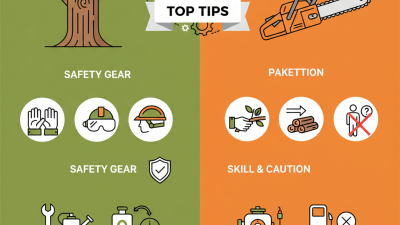
Tips: Use protective clothing, eye and hearing protection, and sturdy footwear. Start the saw on stable ground, away from fuel containers and dry leaves. Use fresh fuel mixed with the exact two-stroke oil ratio listed in the manual. Never guess the ratio. Store fuel in an approved, clearly marked container, and avoid old mixtures. Check local operating rules before cutting near roads, buildings, or property boundaries. Keep both hands on the saw. Stay alert.
| Saw Category | Typical Engine Size | Recommended Guide Bar | Suitable Applications | Key Safety Features to Check | Typical Maintenance Needs | Fuel Requirements |
|---|---|---|---|---|---|---|
| Light-Duty | 25–35 cc | 12–16 in (30–40 cm) | Pruning, small branches, storm cleanup, and occasional property maintenance | Inertia-activated chain brake, throttle lockout, chain catcher, rear hand guard, and low-kickback chain | Clean the air filter regularly, check chain tension frequently, sharpen the chain, inspect the guide bar, and clean the cooling fins | Fresh unleaded gasoline blended with the specified 2-stroke oil; use the fuel-to-oil ratio stated in the owner’s manual |
| General-Purpose | 35–50 cc | 16–20 in (40–50 cm) | Firewood cutting, felling small to medium trees, and regular land maintenance | Chain brake, throttle interlock, anti-vibration system, chain catcher, spark arrestor, and a clearly accessible stop switch | Inspect the chain and brake before every use; clean the air filter and bar groove; verify automatic chain lubrication; replace the spark plug as scheduled | Use the specified unleaded gasoline and air-cooled 2-stroke oil mixture; avoid stale or water-contaminated fuel |
| Medium-Duty | 50–65 cc | 18–24 in (45–60 cm) | Frequent firewood production, medium-tree felling, bucking, and demanding property work | A tested chain brake, effective anti-vibration mounts, chain catcher, hand guards, low-kickback chain, and reliable brake activation | Perform daily cleaning and inspection; maintain chain sharpness and tension; clean or replace filters; inspect clutch, sprocket, fuel lines, and lubrication passages | Use fresh, correctly proportioned 2-stroke premix made with the oil specification required by the engine; do not use straight gasoline |
| Professional-Grade | 60–90 cc | 20–32 in (50–80 cm) | Large trees, continuous cutting, commercial forestry, and heavy-duty storm response | Fast-acting chain brake, chain catcher, front and rear hand guards, throttle lockout, anti-vibration system, spark arrestor, and secure controls | Inspect before every shift; sharpen and tension the chain often; clean filters and cooling areas; check the bar, sprocket, clutch, brake band, fuel system, and fasteners | Use only the fuel grade, ethanol limit, and 2-stroke oil ratio permitted by the engine manufacturer; prepare small batches and label the mixture date |
| High-Torque / Large-Tree | 80–120 cc | 28–42 in (70–105 cm) | Very large timber and specialized professional cutting by trained operators | Chain brake, chain catcher, front and rear guards, throttle lockout, anti-vibration controls, spark arrestor, and a properly matched low-kickback chain | Require frequent professional inspection; monitor chain condition, bar alignment, lubrication, clutch components, brake performance, and engine cooling | Follow the exact fuel and oil specifications in the manual; use clean, fresh premix and store it in an approved, sealed fuel container |
A gasoline chain saw should match your experience, not just your cutting plans. Beginners often choose excessive power, then struggle with weight, vibration, and sudden movement. A compact model with a 35–40 centimeter guide bar is usually easier to control. Fit matters more. Hold the saw with both hands and imagine cutting a log at waist height. If your arms tire quickly, choose a lighter model.
Your budget should include protective equipment, chain oil, fuel containers, and routine servicing. Look for a dependable chain brake, clear safety controls, low vibration, and an easily adjustable chain. An engine that starts smoothly when cold is valuable, especially after sitting in a shed overnight. Ask whether replacement chains and service parts are readily available in your area. A cheap saw becomes expensive when basic maintenance is difficult.
I once underestimated fuel weight during a long trimming job. The saw felt manageable at first, but fatigue changed my grip and accuracy. That experience still influences my choices.
Check the dry weight, then imagine adding fuel and oil. More power is not always better. For occasional property work, moderate power may offer better control and lower running costs. Experienced users can consider longer bars, but only when their technique, strength, and local operating requirements support them. Read the manual carefully, wear suitable protective gear, and follow local rules for fuel storage and use.