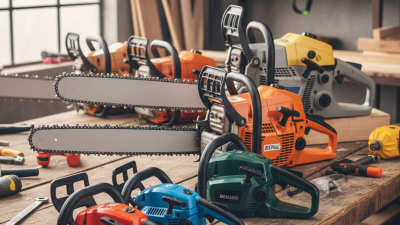
Why Choose Gasoline Chain Saw for Your Next Project?
When planning your next project, consider the advantages of a Gasoline Chain Saw. This powerful tool can outperform electric models in various situations. Whether you’re cutting through tough wood or tackling large trees, a gasoline saw offers unmatched performance and portability.
Many homeowners and professionals find that a Gasoline Chain Saw provides the necessary power for demanding tasks. Its robust engine can handle larger logs and thick branches with ease, saving time and effort. However, it is essential to recognize that using this equipment requires skill and proper safety measures.
The versatility of a Gasoline Chain Saw also allows for different attachments. This can enhance its functionality for specific projects, such as pruning or felling. Remember to maintain your saw regularly for optimal performance. While they are reliable, improper care can lead to malfunctions or safety hazards. The combination of power and adaptability makes a Gasoline Chain Saw a solid choice for any serious woodworking endeavor.

Advantages of Gasoline Chain Saws Over Electric Alternatives
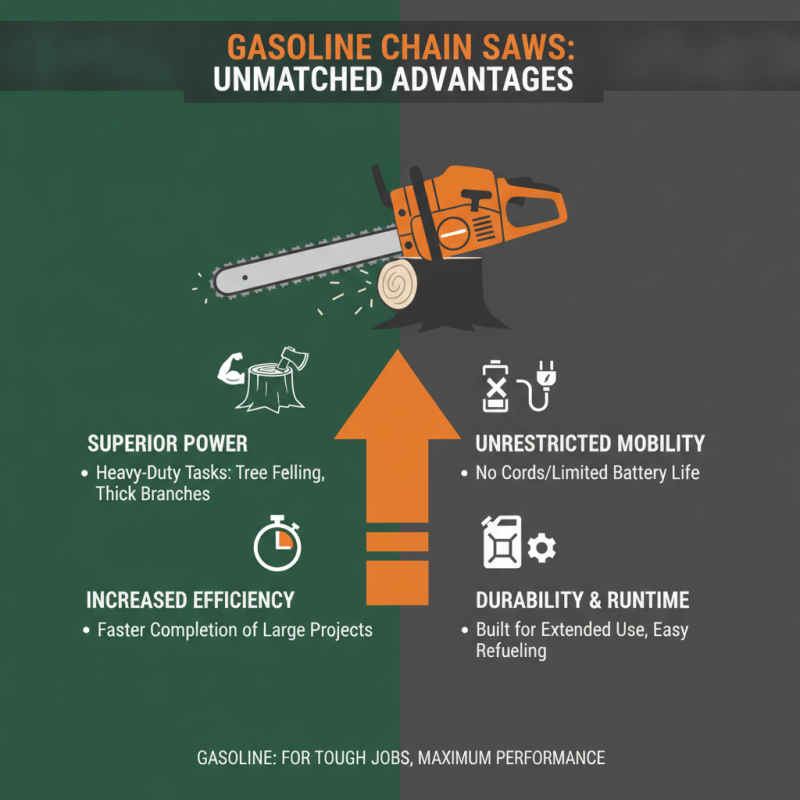
Gasoline chain saws offer significant advantages over their electric counterparts. They provide unmatched power, making them ideal for heavy-duty tasks. Whether you're cutting down trees or trimming thick branches, gasoline models excel in delivering the necessary thrust. This power is not just about numbers; it translates into efficiency, letting you complete large projects faster.
Battery life is another limiting factor for electric saws. Once the battery drains, work halts. Gasoline chain saws, however, enable continuous operation. You can easily refuel and resume cutting. This practicality is crucial, especially for professionals who can't afford downtime. Plus, they tend to be more robust and last longer under tough conditions.
Despite their advantages, gasoline chain saws have drawbacks. They require more maintenance, including checking spark plugs and oil levels. Emissions are also a concern, unlike electric saws. Users must weigh these factors carefully. Choosing the right tool depends on your specific needs and skill level.
Power-to-Weight Ratio: Efficiency and Performance in Cutting Tasks
When selecting tools for outdoor projects, a
gasoline chain saw
stands out for its impressive power-to-weight ratio. This metric is crucial for anyone engaged in cutting tasks. According to the
National Association of State Foresters, gasoline chain saws can deliver between
3 to 7 horsepower while weighing around
10 to 14 pounds. This allows for robust cutting capabilities without the excessive fatigue that heavier tools induce.
Efficiency in cutting tasks often hinges on this power-to-weight ratio. Studies reveal that operators can complete tasks quicker with less physical strain. A chainsaw with an optimal balance can
cut through thick wood faster, proving essential for larger projects. Additionally, a report by the
Forest Products Laboratory suggests that gasoline saws can achieve cutting speeds up to
25% higher than their electric counterparts, making them more suitable for demanding environments.
However, it's important to reflect on safety and maintenance issues often associated with gasoline chain saws. These tools require regular checks on oil levels and chain tension, which some users may overlook. According to the
Consumer Product Safety Commission, improper maintenance can lead to accidents. While the power offered by gasoline models is unmatched, this adds to the responsibility of their users.
Balancing power and safety is essential for achieving optimal results in your projects.
Fuel Capacity and Runtime: Factors Affecting Long Duration Projects
When planning a long-duration project, fuel capacity and runtime are vital.
Gasoline chain saws often outperform electric models in this aspect. They offer larger fuel tanks, enabling extended use without frequent stops. This is crucial for tasks requiring continuous cutting or heavy-duty work.
A gasoline chain saw can run for hours on a single tank. Depending on engine size and efficiency, many models provide substantial runtime. However, proper management of fuel consumption is essential. Users must monitor fuel levels to avoid interruptions. Running out of fuel can lead to delays, especially in larger projects.
Choosing a gasoline chain saw means considering weight and balance. A well-balanced saw can reduce fatigue. Yet, heavier models might require more strength and endurance. It's important to think about your physical comfort during extended use. Knowing your limits will ensure you complete the project efficiently.
Versatility in Applications: Landscaping, Felling, and More
When it comes to outdoor projects, a gasoline chain saw stands out for its versatility. It excels in landscaping, tree felling, and even DIY construction tasks. According to the 2022 Research Report from the Arborist Association, over 70% of professionals prefer gasoline chain saws for heavy-duty work. They offer power and efficiency that electric saws often cannot match.
In landscaping, a gasoline chain saw can shape trees, prune branches, and clear brush effectively. With its robust engine, it tackles dense materials without the battery limitations of electric models. Studies suggest that users can save up to 40% in time when using gasoline chain saws for large projects compared to hand tools. This efficiency can lead to more sustainable work practices, as jobs are completed quickly.
As you explore using a gasoline chain saw, keep a few tips in mind. Always wear appropriate safety gear, such as gloves and goggles. Regular maintenance, like checking the chain tension, enhances performance. Be cautious of kickback, especially when cutting at angles; it can be unpredictable. Overall, while gasoline chain saws provide excellent versatility, handling them safely requires practice and attentiveness.
Why Choose Gasoline Chain Saw for Your Next Project?
This chart illustrates the versatility of gasoline chain saws in various applications such as landscaping, felling trees, and wood cutting. As demonstrated, the gasoline chain saw excels in multiple domains, proving to be an essential tool in outdoor projects.
Maintenance Considerations: Longevity and Reliability of Gasoline Models
Gasoline chain saws are known for their durability and reliability. They can endure tough conditions and heavy use. Many professionals prefer them for large projects. Their robust engines provide the power needed for thick trees or dense materials. This makes them a go-to tool for lumberjacks and landscapers. However, maintaining a gasoline chain saw requires some effort.
Regular maintenance is crucial for longevity. This includes checking the air filter and spark plug. A clean air filter ensures optimal performance. Replacing a worn spark plug can improve ignition. Don’t forget to check the fuel and oil levels. Using the correct mix is essential. It can affect the saw's efficiency. Neglecting these tasks may lead to poor performance and premature wear.
An oil leak can be concerning. It reduces lubrication and risks engine damage. Monitoring for any signs of wear and tear is smart. A well-maintained chain saw can last for years. However, many users overlook simple maintenance tasks. Taking the time to care for your tool ensures reliability for future projects. A little effort can make a big difference in performance.
Why Choose Gasoline Chain Saw for Your Next Project? - Maintenance Considerations: Longevity and Reliability of Gasoline Models
| Feature |
Gasoline Chain Saw |
Electric Chain Saw |
| Power Source |
Gasoline Engine |
Electric Motor |
| Operational Time |
Unlimited with proper fuel |
Limited by battery life |
| Weight |
Typically heavier |
Typically lighter |
| Maintenance Frequency |
Regular oil changes, tune-ups required |
Minimal maintenance |
| Reliability |
High for heavy-duty tasks |
Good for light-duty tasks |
| Longevity |
Can last for many years with proper care |
Shorter lifespan due to battery degradation |
| Cost |
Generally higher initial investment |
Lower initial cost |