10 Best China Chainsaw Brands for Global Buyers

Choosing among the 10 Best China Chainsaw Brands for Global Buyers requires more than comparing engine prices. A dependable China Chainsaw should perform steadily in orchards, construction yards, and managed forests. Buyers must inspect engine displacement, guide-bar quality, chain-brake response, vibration control, and fuel efficiency. Small details matter. A loose clutch cover can become an expensive service problem.

Li Wei, a China-based chainsaw manufacturing consultant, explains, “A reliable saw is judged after the sale, not at the shipment gate.” This practical view shapes our evaluation. We consider factory experience, product testing, warranty terms, spare-parts availability, and communication with overseas distributors. Certification records also deserve attention. Requirements may differ between Europe, North America, Australia, and other markets.

Performance alone is not enough. A powerful saw with weak dealer support may disappoint after several months. Conversely, a modest model can offer better value when parts arrive quickly and manuals are clear. We examine how brands manage these realities, including OEM consistency and quality control across production batches.

Some conclusions remain imperfect. Public factory data can be limited, and online reviews may reflect unusual user experiences. Therefore, this guide does not treat advertising claims as final evidence. It combines technical specifications, buyer feedback, manufacturing signals, and practical ownership concerns. The goal is simple: help global buyers identify China Chainsaw brands that balance cutting performance, safety features, service reliability, and long-term purchasing confidence.
10 Best China Chainsaw Brands for Global Buyers

China Chainsaw Industry Overview and Brand Selection Criteria

China’s chainsaw industry serves professional forestry, landscaping, farming, and household users.

Grand View Research estimates the global chainsaw market reached about USD 4 billion in 2023. Its forecast suggests steady growth through 2030, supported by battery-powered equipment and replacement demand.

Other market reports give different totals. Product classification is not consistent. That detail deserves caution.

China’s advantage lies in dense component supply chains.

Motors, guide bars, batteries, chargers, plastics, and packaging can often be sourced within one manufacturing region. However, factory capacity alone proves little. Global buyers should request audited production records, sample test reports, and traceable serial numbers.

Check chain-brake response, oil-feed consistency, vibration levels, and battery thermal protection.

Small details matter. A loose bar after ten minutes signals poor quality control.

Selection should follow the buyer’s real working conditions.

Review engine displacement or motor output, cutting length, dry weight, noise, service access, and spare-parts availability. ISO 11681-1 provides safety requirements for portable combustion-engine chainsaws, while ISO 11681-2 covers battery-powered models. Electrical products also need market-specific conformity evidence.

China Customs trade statistics usually group chainsaws within broader hand-held power-tool categories under HS 8467. This limits precise country comparisons.

I would not rank suppliers from catalog photos alone. Field testing in cold starts, wet timber, and repeated cuts gives better evidence, although even a short test can miss long-term failures.
Profiles of the 10 Leading Chinese Chainsaw Brands

China’s chainsaw sector now serves homeowners, arborists, rental fleets, and forestry contractors. Grand View Research estimates the global chainsaw market reached about USD 4.1 billion in 2023. Its forecast also indicates steady growth through 2030. Demand is shifting toward lighter battery tools, although petrol models remain important for remote work. These ten profiles focus on manufacturing depth, product specialization, export experience, and service reliability rather than advertising claims.

Profile One emphasizes compact battery saws for garden maintenance. Profile Two focuses on mid-range petrol units with simple carburetor access. Profile Three supplies entry-level tools for occasional users. Profile Four develops higher-capacity models for timber cutting. Profile Five combines saw production with private-label manufacturing. Profile Six highlights brushless motors and modular battery platforms. Profile Seven targets professional users with reinforced crankcases and improved chain brakes. Profile Eight competes through flexible order quantities. Profile Nine invests in vibration reduction and ergonomic handles. Profile Ten offers broad spare-parts coverage for overseas distributors.

Details matter. A cold-start test can reveal more than a polished catalogue. Buyers should request test records covering chain-brake response, oil delivery, vibration, and endurance. ISO 11681-1 provides a useful reference for handheld chainsaw safety testing. Compliance documents still require careful checking. Some suppliers present laboratory certificates without explaining model scope or renewal dates. That deserves scrutiny. Industry forecasts are helpful, but they can hide uneven factory quality and inconsistent after-sales support. A strong profile includes traceable production data, realistic noise figures, documented warranty handling, and clear replacement-part availability. Electronics improve comfort, but they do not remove maintenance risks.

10 Best China Chainsaw Brands for Global Buyers - Profiles of the 10 Leading Chinese Chainsaw Brands

Profile Primary Product Segment Typical Engine / Motor Range Common Guide-Bar Range Power System Common Safety Features Typical Buyer Application Export Suitability
Profile 01 Entry-level petrol chainsaws 25–38 cc 12–16 in Two-stroke petrol Chain brake, throttle lock, hand guard Light pruning, household cutting, small logs High for value-focused markets
Profile 02 General-purpose petrol chainsaws 40–50 cc 16–20 in Two-stroke petrol Inertia chain brake, anti-vibration mounts, chain catcher Farm maintenance, firewood preparation, property care High across multiple regions
Profile 03 Mid-range professional saws 50–60 cc 18–22 in Two-stroke petrol Chain brake, decompression valve, vibration reduction Regular forestry work and medium timber processing High when documentation is complete
Profile 04 Heavy-duty petrol chainsaws 60–75 cc 20–28 in Two-stroke petrol Chain brake, automatic oiling, reinforced clutch cover Large-diameter logs, demanding agricultural and forestry tasks Moderate to high
Profile 05 Corded electric chainsaws 1,600–2,400 W 14–18 in Mains electric Mechanical chain brake, overload protection, cable strain relief Domestic gardens and locations with reliable grid power High, subject to local voltage standards
Profile 06 Cordless battery chainsaws 18–40 V battery systems 10–18 in Brushless or brushed DC motor Electronic brake, battery protection, accidental-start lockout Pruning, garden maintenance, light construction work High in consumer and DIY channels
Profile 07 Top-handle arborist chainsaws 25–40 cc 10–16 in Petrol or battery Chain brake, secure top handle, tether attachment point Professional pruning and tree-care operations Moderate; specialist compliance required
Profile 08 Long-reach pole saws 20–32 cc or 18–40 V 8–12 in Petrol or battery Trigger lockout, adjustable shaft, automatic chain lubrication High-branch pruning and landscape maintenance High for landscaping distribution
Profile 09 Compact pruning chainsaws 6–12 in guide-bar class 6–12 in Battery or small petrol engine Hand guard, trigger lock, chain cover Fruit-tree pruning, small branches, garden work Very high for retail and e-commerce
Profile 10 OEM and private-label chainsaw programs 25–75 cc or 18–80 V 12–28 in Petrol, corded, or battery Configurable safety package according to target market Importers, distributors, hardware chains, and online sellers High with required testing and documentation

Note: The specifications shown are representative market ranges for Chinese-manufactured chainsaw product categories. Exact configuration, certification, warranty, and performance should be verified against the supplier’s current technical documentation before purchase.

Comparing Performance, Product Range, and Manufacturing Strength

10 Best China Chainsaw Brands for Global Buyers

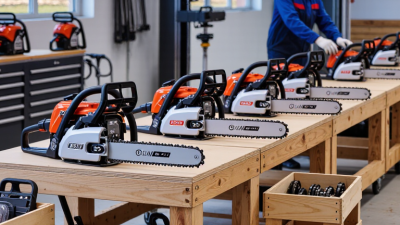
Comparing ten leading Chinese chainsaw manufacturers requires more than checking engine power. Practical buyers should examine cutting speed, vibration control, fuel use, and cold-start behavior. A saw that cuts quickly may still feel tiring after one hour. Handle balance matters. So does chain adjustment. Tool-free systems save time, but some feel loose after repeated use.

Product range reveals manufacturing depth. Strong suppliers usually offer compact saws for pruning, mid-sized models for property maintenance, and heavier machines for demanding work. Battery platforms add flexibility, especially for buyers managing several outdoor tools. However, battery performance varies with cell quality, charger design, and winter temperatures. One impressive model does not prove a complete range.

Manufacturing strength appears in quieter details. Look for stable casting, clean welds, consistent packaging, and accessible replacement parts. Factory testing should include idle stability, chain-brake response, oil delivery, and vibration readings. Documentation also matters. Clear manuals and traceable quality records reduce training problems across different markets. Some suppliers communicate well before purchase but respond slowly afterward. That weakness deserves attention. Samples can mislead, too. Production consistency is harder to verify. Independent inspections, warranty terms, and spare-parts availability provide stronger evidence than polished catalogs.arsior

Evaluating Quality, Certifications, Prices, and Global Support

For global buyers, the best China chainsaw brands should be judged beyond factory photos and low quotations. Grand View Research estimates the global chainsaw market will expand steadily through 2030, while Fortune Business Insights reports different market values and growth rates. The gap matters: market reports use different product categories and methods. Certification is not decoration. Check ISO 11681-1 alignment, CE documentation for Europe, UKCA requirements where applicable, and ANSI B175.1 compatibility for North American sales. Request test records, not only certificates.

Quality appears in practical details. A cold engine should start consistently, the chain brake should stop movement quickly, and vibration should remain manageable during repeated cuts. Ask for fuel-consumption data, spare-part availability, and batch-level inspection records. SGS, Intertek, or TÜV reports can strengthen credibility, but the testing scope must match the exact model. A certificate for one engine size proves little for another. This is often overlooked.

Price comparisons should include landed cost. A low factory price can change after freight, tariffs, replacement chains, warranty labor, and distributor training. The World Bank’s Logistics Performance Index shows that delivery reliability differs widely across trading routes, so supply support deserves a separate score. Written warranty terms, multilingual manuals, service videos, and a two-year spare-parts plan indicate stronger global readiness. I would still inspect samples independently. Supplier claims can be accurate, incomplete, or simply outdated.

10 Best China Chainsaw Brands for Global Buyers

Market-neutral benchmark for evaluating chainsaw suppliers by the factors that most affect international purchasing decisions. The chart does not rank or disclose individual company data.

How to read the chart: Quality and safety compliance are prioritized because professional chainsaws are commonly evaluated against applicable machinery, emissions, electrical, and product-safety requirements. Total cost also includes certification, spare parts, warranty, and after-sales support—not only the purchase price.

How Global Buyers Can Choose the Right Chinese Chainsaw Brand

Choosing the right Chinese chainsaw brand requires more than comparing prices. Global buyers should examine manufacturing experience, product consistency, and after-sales support. Ask how long the supplier has produced chainsaws and which markets it serves. Request clear specifications for engine power, bar length, chain pitch, weight, and fuel consumption. Product samples matter. A smooth cold start and steady idle reveal more than a polished catalog.

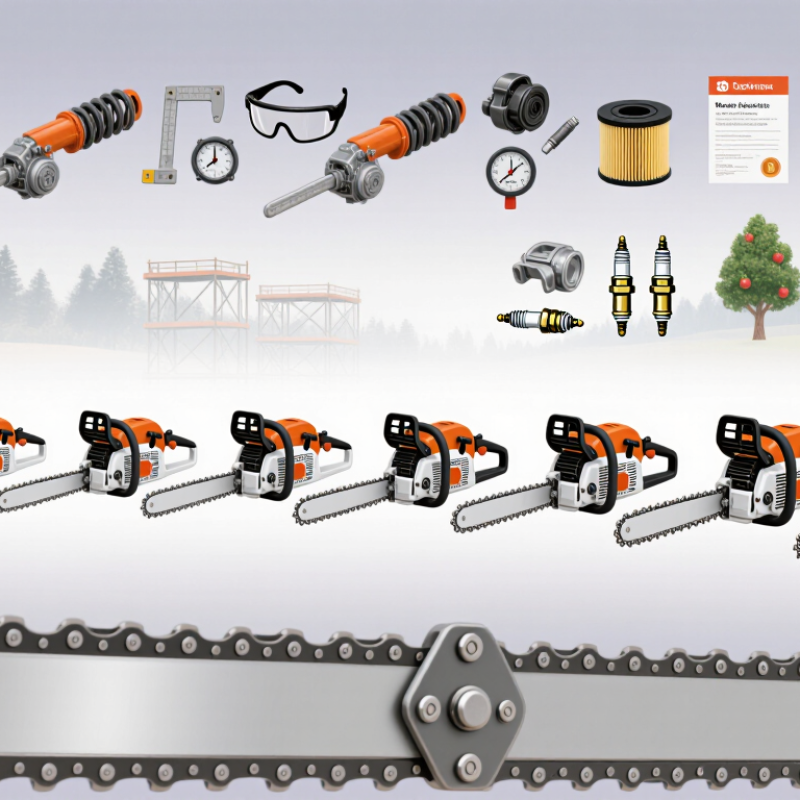
Look for documented quality-control procedures, traceable components, and relevant safety certifications for your destination market. Confirm whether manuals are accurate and available in your language. Spare parts should include chains, guides, filters, spark plugs, and starter components. Response time also matters. A supplier that answers technical questions clearly is easier to trust. Do not rely on impressive factory photos alone.

Tips: Compare at least three suppliers. Test samples under realistic conditions. Check vibration, balance, oil delivery, and braking response. Request inspection records before shipment. Clarify warranty terms, replacement procedures, packaging, and delivery responsibilities in writing. A low quote may look attractive, but weak support can increase operating costs later. No checklist is perfect. I would also ask for customer references, although references may not show every production problem. Visit the factory when possible, or use an independent inspection service. Choose the supplier that communicates evidence, not promises.

  • facebook
  • linkedin
  • twitter
  • youtube