Why Choose a Petrol Chain Saw for Global Purchasing?

Global buyers are reassessing the role of the Petrol Chain Saw in forestry, land management, and emergency cleanup. The FAO Global Forest Resources Assessment 2020 reports approximately 4.06 billion hectares of forest worldwide. This vast operating environment includes remote slopes, wet plantations, and regions with limited electrical infrastructure. Petrol power remains practical where battery charging is slow or unavailable. That matters.

Field experience shows clear advantages. A quality petrol model can deliver strong cutting performance, rapid refueling, and extended operation with several approved fuel containers. It also supports familiar servicing practices, including spark-plug inspection, air-filter cleaning, and chain sharpening. These details reduce downtime when dealers are far away. However, fuel quality, storage conditions, operator training, and spare-parts access can strongly affect reliability. The machine is not automatically dependable.

Purchasing decisions should follow recognized safety and emissions requirements. ISO 11681-1 establishes safety requirements for portable forestry chain saws, including protective design and testing provisions. Buyers should also verify applicable engine-emission rules, such as U.S. EPA requirements and European Stage V standards. These checks strengthen supplier credibility and reduce compliance risks. Industry market studies, including Grand View Research’s outdoor power equipment analyses, also indicate continued demand for engine-powered equipment across professional applications. Yet market forecasts are not field evidence. Noise, vibration, exhaust emissions, and operator fatigue remain genuine disadvantages. The trade-off is real. A Petrol Chain Saw is therefore best evaluated through total ownership cost, service support, local regulations, and actual working conditions, rather than purchase price alone.
Why Choose a Petrol Chain Saw for Global Purchasing?

What Is a Petrol Chain Saw and How Does It Work?

Why Choose a Petrol Chain Saw for Global Purchasing?

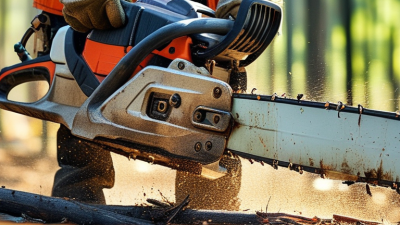
A petrol chain saw uses a compact internal-combustion engine to rotate a cutting chain. Most models use a two-stroke engine. A measured fuel-and-oil mixture enters the cylinder, ignites, and pushes the piston downward. That movement turns the crankshaft. A centrifugal clutch then transfers power to the sprocket, which drives the chain around the guide bar.

The mechanism is simple, but not basic. The chain cuts through wood using small, sharpened cutters. Bar oil reduces friction and limits heat during operation. The FAO’s Global Forest Resources Assessment 2020 recorded 4.06 billion hectares of forest worldwide, covering about 31% of global land area. This scale helps explain continued demand for portable cutting equipment in forestry, land management, and rural maintenance.

Petrol power remains useful where electrical supply is unavailable or work sites change frequently. Refueling can take minutes, while battery charging depends on equipment and weather conditions. Yet purchasing decisions should examine fuel quality, vibration, starting performance, spare parts, and operator training. Emissions and noise also deserve attention. Petrol does not mean superior everywhere. Cold starts can be frustrating. Maintenance is often underestimated. The U.S. Occupational Safety and Health Administration highlights kickback, improper handling, and inadequate protective equipment as major chainsaw hazards. A responsible buyer should treat the engine, chain brake, lubrication system, and user training as one complete system.

Key Advantages for Global Purchasing Decisions

Why Choose a Petrol Chain Saw for Global Purchasing?

Key Advantages for Global Purchasing Decisions

A petrol chain saw can offer practical power where electrical access is unreliable. It supports forestry work, land clearing, and emergency maintenance across remote regions. Its fuel system allows operators to work away from fixed power supplies. This flexibility often matters to international buyers managing varied job sites.

Power matters. Petrol engines usually handle thicker timber and longer cutting sessions. They can also reduce dependence on charging stations, replacement batteries, and local electrical standards. For global purchasing, buyers should check fuel availability, engine specifications, spare-part access, and operator training. These details affect real ownership costs more than the purchase price alone.

Field experience also reveals drawbacks. Petrol models are louder, heavier, and require fuel storage and regular servicing. Emissions rules differ between countries, so documentation must be reviewed before shipment. A responsible supplier should provide safety instructions, maintenance guidance, and clear technical data. Test cutting in local conditions can expose vibration, starting, or chain-tension issues early. Small issues matter.

I would not treat petrol power as the automatic choice. Transport distance, climate, noise limits, and available technicians can change the decision. In some regions, fuel quality may also vary. That risk deserves honest planning.

Why Choose a Petrol Chain Saw for Global Purchasing?

Petrol fuel has a much higher specific energy than a typical lithium-ion battery pack: approximately 44 MJ/kg for petrol compared with about 0.9 MJ/kg for a battery pack. This energy-storage advantage can help reduce carried energy mass and support longer field operation where charging infrastructure is limited. Actual chain saw runtime also depends on engine efficiency, cutting load, machine design, and operating conditions.

Reference values: U.S. Department of Energy fuel-property data and widely reported lithium-ion battery-pack specific-energy ranges. Values are technology references, not brand or company data.

Performance, Mobility, and Suitable Operating Conditions

Why Choose a Petrol Chain Saw for Global Purchasing?

Performance depends on the worksite, not only engine size. Petrol chain saws deliver strong cutting power where electricity is unavailable. The U.S. Energy Information Administration reports that gasoline contains about 120,000 British thermal units per gallon. This high energy density supports longer mobile operation with one fuel container. In field use, that means fewer cable limits and easier movement between scattered trees.

Mobility matters in remote forestry, storm cleanup, and large private land. FAO’s Global Forest Resources Assessment 2020 records about 4.06 billion hectares of forest worldwide. Many working areas remain uneven, wet, or far from reliable power. A petrol model can cross muddy ground and steep slopes without searching for an outlet. It starts quickly when properly maintained. Cold weather may still expose weaknesses.

Suitable operating conditions require honest assessment. Petrol chain saws perform well during extended outdoor cutting, especially with trained operators and planned refueling. However, they produce exhaust, noise, and vibration. The European Commission’s Stage V framework places strict emission requirements on non-road engines, so buyers should verify current compliance documents. A practical procurement check should include fuel availability, service access, chain replacement, and operator training. I have seen purchasing decisions focus too heavily on horsepower. That is a mistake. More power can also mean greater fatigue, fuel use, and control difficulty.

Fuel, Maintenance, Safety, and Environmental Considerations

Why Choose a Petrol Chain Saw for Global Purchasing?

Fuel, Maintenance, Safety, and Environmental Considerations

A petrol chain saw suits buyers working far from power outlets. It offers strong cutting power and longer field operation. However, fuel planning matters. Use the fuel type and mixture specified in the manual. Store fuel in an approved, sealed container away from heat and sunlight. Always check local transport and storage rules before international purchasing.

Maintenance determines reliability more than engine size. Inspect the chain, guide bar, brake, and tension before every job. Clean the air filter regularly, especially after dusty cutting. A dull chain increases vibration and fuel use. It also makes cutting slower and less controlled.

I once underestimated a loose chain. The work became uncomfortable quickly. That mistake still influences my inspection routine.

Safety requires training, protective equipment, and a clear work area. Wear eye, hearing, hand, leg, and foot protection suitable for chainsaw use. Keep both hands on the handles and avoid cutting above shoulder height. Never work near people, unstable branches, or hidden cables. Exhaust fumes also require outdoor operation and good airflow.

Petrol models create emissions and noise, so buyers should consider work frequency and nearby communities. Cleaner fuel practices help, but they do not remove environmental impact. No checklist is perfect. Local servicing access, spare parts, and responsible disposal deserve equal attention.

How to Evaluate Suppliers, Compliance, and Total Cost

Why Choose a Petrol Chain Saw for Global Purchasing?

A petrol chain saw can support remote work where electricity is unreliable. Its mobility is useful on farms, construction sites, and managed woodland areas. However, global purchasing requires more than comparing engine size and quoted prices. Supplier evaluation should begin with documented production experience, quality controls, and stable access to replacement parts.

During supplier audits, request test records for the chain brake, throttle control, guide bar, and vibration levels. Ask for clear user manuals in the destination market’s language. Confirm emissions, noise, labeling, packaging, and import documents before placing an order. Requirements differ between countries. A certificate accepted in one market may not satisfy another authority. This detail is easy to miss.

Very easy to overlook.

Total cost includes more than the factory price. Add freight, duties, inspection fees, storage, warranty handling, training materials, and spare chains. A low quotation may become expensive after delayed parts or repeated quality claims. Ask suppliers how they inspect fuel lines, starting systems, and fasteners during production. Request sample units for independent evaluation under realistic conditions. One sample is not enough, but it reveals weak assembly quickly.

Supplier promises can sound precise while remaining difficult to verify. Keep written specifications, inspection thresholds, and corrective-action deadlines. I have found that even a careful spreadsheet can hide uncertain assumptions, especially when service costs are estimated rather than measured.

  • facebook
  • linkedin
  • twitter
  • youtube