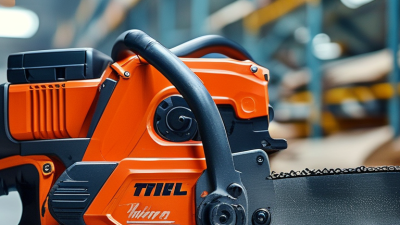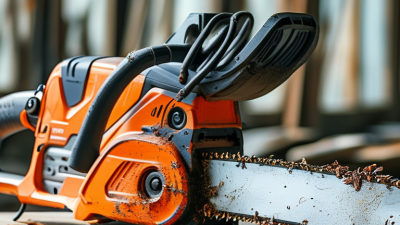
Why Choose a China Chain Saw Supplier?
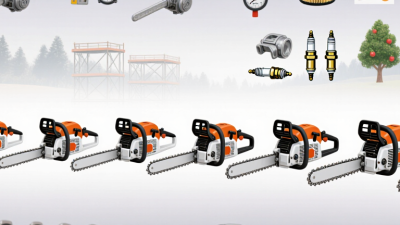
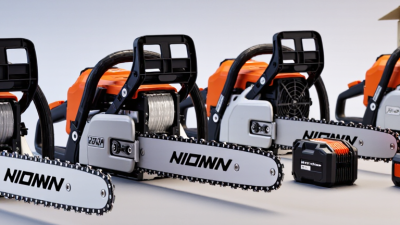
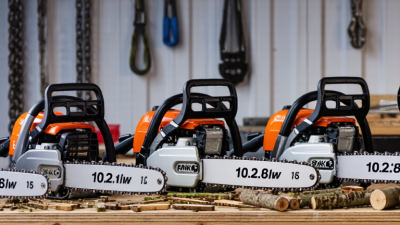
Choosing a China Chain Saw supplier can offer practical value for importers, distributors, and professional forestry businesses. China has developed a broad manufacturing base for outdoor power equipment. Many factories now support private labeling, component customization, and volume production. They also serve different markets, from small garden saws to heavier logging models.
John Ball, a respected forestry professor and chainsaw safety educator, often reminds users, “Chainsaws do not forgive mistakes.” His warning applies to sourcing as well as operation. A reliable supplier should provide clear specifications, stable engine performance, tested chain brakes, and complete safety documentation. Buyers should inspect factory capabilities, production records, sample quality, and after-sales support before signing a contract. Photos are useful. Physical samples are better.
A capable China Chain Saw manufacturer may offer competitive pricing because of integrated supply chains and large-scale production. This can reduce costs without automatically reducing quality. Still, price alone is a weak reason to choose a supplier. Some factories communicate well before payment, then respond slowly when problems appear. That risk deserves attention.
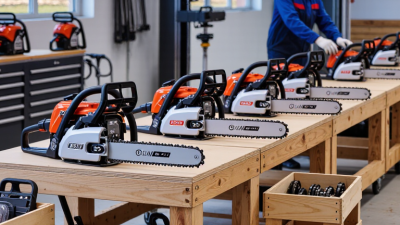
Look for suppliers with traceable quality procedures, experienced technicians, and consistent export experience. Ask how they test vibration, fuel systems, guide bars, and emergency stop functions. Request evidence, not promises. A factory visit can reveal details that online catalogs hide, such as crowded assembly lines or poorly organized spare-parts storage.
The right partnership is not perfect. It is transparent, responsive, and willing to improve. With careful verification, a China Chain Saw supplier can become more than a low-cost source. It can become a dependable manufacturing partner.
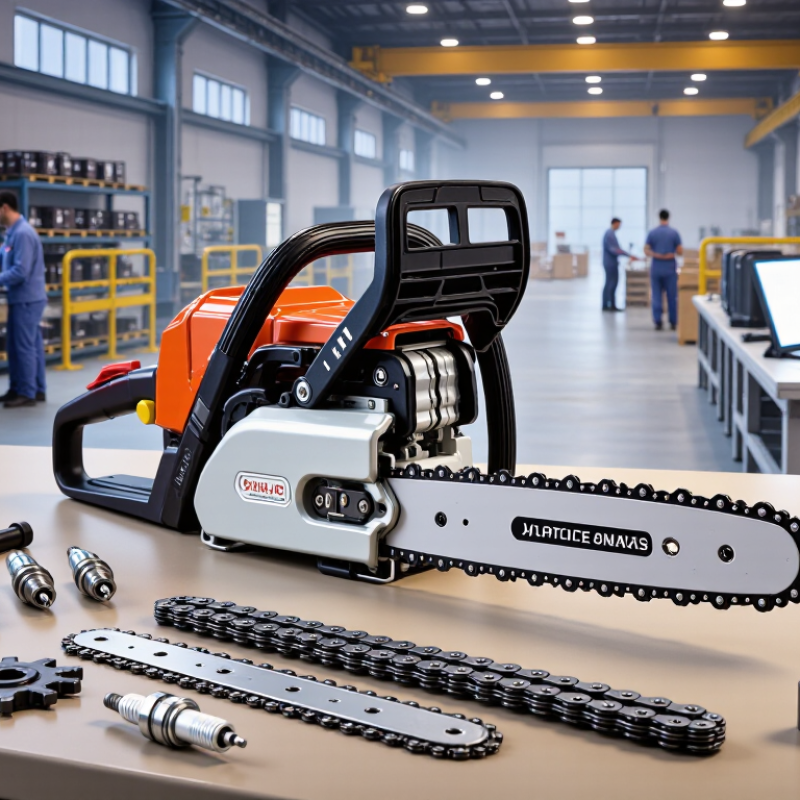
China’s Role in the Global Chain Saw Supply Market
Why Choose a China Chain Saw Supplier?
China’s Role in the Global Chain Saw Supply Market
China has become a major manufacturing base in the global chain saw supply market. Its factories support large production volumes, flexible specifications, and competitive purchasing costs. Many suppliers serve distributors across Europe, North America, Southeast Asia, and other regions.
A reliable supplier should show more than attractive pricing. Factory audits can reveal machining quality, assembly discipline, and parts storage conditions. Product samples should undergo cutting tests, vibration checks, oil-leak inspections, and repeated starting trials. These details matter in real work, especially when operators use equipment for long hours. Some Chinese manufacturers also provide customized packaging, manuals, spare parts, and technical support for overseas markets.
However, supplier quality is not uniform. That matters. A polished catalog cannot replace clear test records or consistent communication. Buyers should review production capacity, material specifications, quality-control procedures, and relevant market certifications. A practical sourcing process may include a video factory tour, independent inspection, and a small trial order before larger cooperation begins. This approach takes more time, but it can expose weak points early.
China’s supply network also offers access to engines, guide bars, chains, metal components, and packaging within connected industrial regions. This concentration can shorten development cycles and simplify procurement. Still, delivery delays, translation mistakes, and inconsistent batches may occur. Honest evaluation is necessary. The best decision comes from evidence, not assumptions.
| Dimension | Market Fact | What It Means for Buyers |
|---|---|---|
| Manufacturing role | China is an established manufacturing and export base for machinery and power equipment, including chain saws and related components. Supplier capabilities vary by factory. | Assess the individual supplier’s production equipment, quality controls, experience with your product type, and export history rather than assuming all suppliers offer the same capability. |
| Product types | The market includes petrol-powered, corded electric, and battery-powered chain saws. These types differ in power source, maintenance needs, operating conditions, and applicable requirements. | Specify the intended application, power source, bar and chain configuration, duty cycle, and target market before requesting quotations. |
| Component supply chain | A chain saw typically integrates an engine or electric motor, cutting attachment, guide bar, chain, controls, and protective features. Components may be made in-house or sourced from other manufacturers. | Ask for a component list, critical-part specifications, replacement-part availability, and information about how incoming components are inspected. |
| Trade classification | HS heading 8467.81 covers chain saws with a self-contained non-electric motor. Classification for electric models and national tariff treatment should be checked separately with the relevant customs authority. | Confirm the correct tariff code, duties, taxes, and import documentation for the product and destination country before placing an order. |
| Safety requirements | ISO 11681-1 specifies safety requirements and testing for general-purpose portable chain-saws. Applicable legal requirements depend on the product and the market where it will be sold. | Request test reports and technical documentation relevant to the exact model. Confirm that documents cover the intended destination market and product configuration. |
| Engine emissions | In the European Union, Regulation (EU) 2016/1628 sets emissions requirements for engines in non-road mobile machinery, including covered engine categories used in outdoor power equipment. | For petrol models sold in the EU, verify the engine category, emissions compliance, and required marking and documentation for the specific machine. |
| Customization and order terms | Suppliers may offer options such as packaging, manuals, accessories, or product specifications. Minimum order quantities, tooling needs, and lead times are supplier- and product-specific. | Get customization details, approved samples, minimum quantities, production lead times, and change-control terms in writing before production. |
| Quality verification | A supplier’s claims do not by themselves establish product quality or regulatory compliance. Inspection results and documentation should relate to the actual model and production batch. | Agree on measurable acceptance criteria and consider pre-shipment inspection, functional testing, and document verification. |
| After-sales support | Serviceability depends on the availability of compatible spare parts, repair information, warranty terms, and the supplier’s ability to support the destination market. | Confirm warranty coverage, spare-parts lead times, parts identification, and responsibility for technical support before committing to a supply agreement. |
| Sourcing conclusion | China can provide access to a broad manufacturing base, but capability, compliance, and service quality differ among suppliers and models. | Choose based on verified product compliance, sample performance, transparent specifications, quality processes, and dependable after-sales arrangements—not origin alone. |
Reference points: Harmonized System heading 8467.81; ISO 11681-1; Regulation (EU) 2016/1628. Check current editions and destination-market rules before purchase.