Top Petrol Chain Saw Manufacturers in China for Buyers

Choosing a Petrol Chain Saw manufacturer in China takes more than comparing prices or engine ratings. Buyers need to assess performance, production consistency, parts support, and the supplier’s ability to document its claims.

The Food and Agriculture Organization’s Global Forest Resources Assessment 2020 reported that forests cover 4.06 billion hectares, about 31% of the world’s land area. This figure describes the forestry context, not chainsaw sales. Still, it helps explain why dependable equipment matters across forestry and land management. Grand View Research’s Chainsaw Market Size, Share & Trends Analysis Report also tracks market growth and product trends. Its global market estimates combine different saw types, so they should not be treated as petrol-only demand figures. Numbers need context.

For buyers, the practical questions are closer to the workshop floor: Does the saw start reliably after storage? Can the supplier provide clear specifications, spare-part lists, and warranty terms? Check engine displacement, rated power, bar compatibility, fuel use, vibration information, and applicable market requirements. Ask for supporting test records, not just polished product photographs. Small details matter.

A factory visit or sample evaluation can reveal issues that a catalogue misses, though neither guarantees every production run will match. This guide introduces notable Chinese manufacturers and the evidence buyers can use to compare them. Take rankings as a starting point, not a substitute for supplier checks.
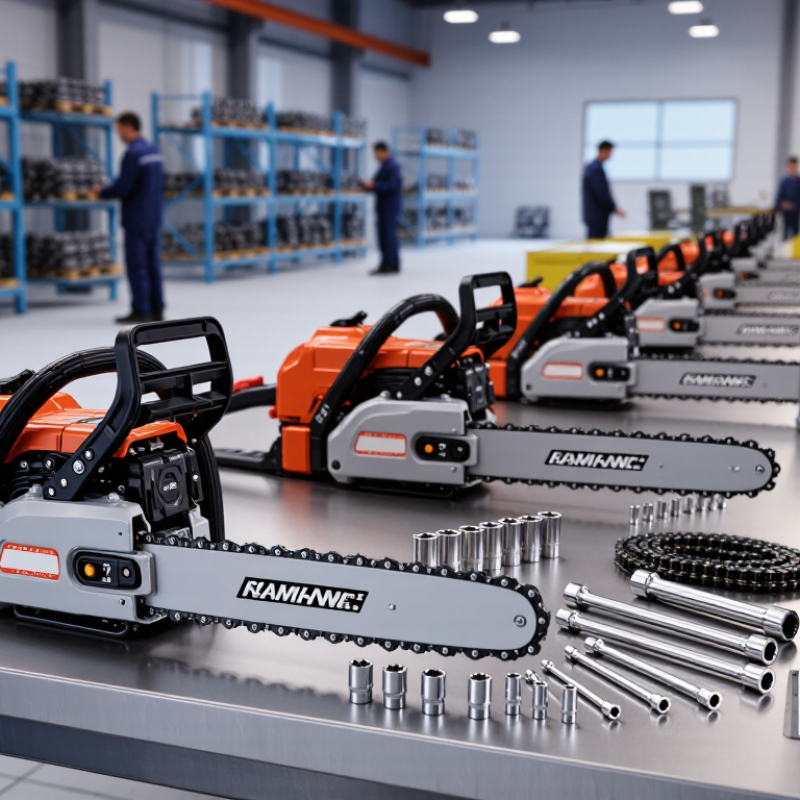
Top Petrol Chain Saw Manufacturers in China for Buyers

Understanding Petrol Chainsaws and Their Main Applications

Petrol chainsaws use a small combustion engine to drive a toothed chain around a guide bar. Their mobility is useful where power outlets are unavailable, such as remote woodland or large rural properties. A suitable saw can cut firewood, remove fallen limbs, and handle tree sections too thick for many electric models. Not every job needs one.

Bar length and engine output should match the wood and the operator’s experience. A longer bar is not automatically better; it adds weight and can make control harder. For buyers comparing Chinese manufacturers, practical details matter: clear specifications, accessible replacement parts, and an understandable maintenance manual. A catalogue alone cannot show how a saw feels after an hour of work.

Petrol models also need regular attention. Operators must check the chain tension, sharpen the cutters, and follow the manufacturer’s instructions for fuel and maintenance. They produce exhaust and substantial noise, so outdoor use, hearing protection, eye protection, and trained handling are important. For occasional trimming near a home, a lighter electric saw may be more convenient. The right choice depends on the site, the timber, and the person using it.
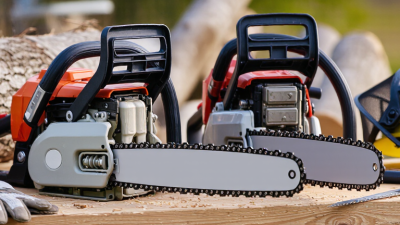
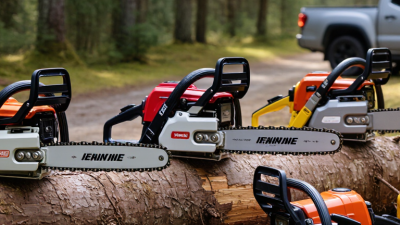
How to Evaluate Chinese Petrol Chainsaw Manufacturers

Evaluating a Chinese petrol chainsaw manufacturer begins with evidence, not a polished catalog. Ask for current engine specifications, cutting-bar options, fuel-consumption data, and rated test conditions. Numbers without test details are hard to compare. Request a sample unit and run it under a consistent workload, such as repeated cuts through dry timber. Record starting behavior, vibration, chain tension changes, and temperature after each session.

A capable factory should explain its production and inspection steps in plain language. Ask how it checks cylinder machining, ignition components, chain-brake operation, and final assembly. Review inspection records from recent batches, then compare them with the sample you tested. A single good unit proves little. Visit if possible, or arrange an independent inspection; photographs alone can hide production bottlenecks. Details count.

Discuss warranty terms, replacement-part lead times, and who handles troubleshooting after shipment. Check that manuals, labels, and product claims match the machine and the intended market’s requirements. Clear answers matter. One caveat: carburetor tuning can vary between units, affecting how easily they start. That is not a laboratory finding, so verify performance with several samples and written test criteria. No shortcut exists.

Top Petrol Chain Saw Manufacturers in China for Buyers - How to Evaluate Chinese Petrol Chainsaw Manufacturers
Evaluation Dimension Suggested Weight What Buyers Should Check Evidence to Request or Verify Buyer Score (0–5)
Product and application fit 15% Compare intended use, engine displacement, rated power, guide-bar options, chain pitch, and machine weight. Confirm that the proposed configuration suits the work and destination market. Model-specific specification sheet, operating manual, product label, and a sample unit or demonstration where practical. ___ / 5
Safety design and documentation 15% Check for safety features such as a chain brake, throttle interlock, chain catcher, hand guards, and clear operating instructions. Confirm applicable safety requirements for the destination market. Risk assessment or test documentation for the exact model; manual and labeling; third-party reports where required. ISO 11681-1 is a relevant safety standard for certain forestry chain-saws; confirm the applicable scope and current requirements. ___ / 5
Quality control and consistency 15% Assess incoming-material checks, in-process inspection, final inspection, traceability, and how production defects are handled. Verify consistency across repeat orders. Quality procedures, inspection records, sample test reports, lot or serial traceability examples, and documented corrective-action process. ___ / 5
Emissions and market compliance 10% Confirm that the engine configuration and emissions documentation meet the rules for the intended sales market. Requirements can vary by jurisdiction and product category. Applicable emissions certificates or test reports tied to the exact engine and model; verify authenticity and scope with the relevant authority, accredited laboratory, or importer. ___ / 5
Performance and durability testing 10% Review starting, idling, cutting, vibration, fuel-use, and endurance test methods. Make sure claims are supported by repeatable tests rather than unsupported marketing statements. Test procedures, dated results, sample identification, acceptance criteria, and—where appropriate—independent laboratory reports. ___ / 5
Spare parts and after-sales support 10% Check availability of commonly replaced parts, parts identification, technical support, repair information, and the process for handling warranty claims. Illustrated parts list, parts ordering procedure, written support terms, warranty-claim process, and a proposed spare-parts package. ___ / 5
Manufacturing capability and traceability 10% Verify that the supplier can control assembly, testing, and subcontracted components for the quoted product. Distinguish a factory from a trading intermediary if that matters to the purchase. Live or independently arranged factory audit, production-flow records, component-source controls, and traceability examples for finished units. ___ / 5
Order terms and production planning 5% Compare quoted minimum order quantity, production lead time, payment terms, packaging, and capacity commitments against the buyer’s needs. These terms should be confirmed for each order. Written quotation, pro forma invoice, production schedule, packaging specification, and agreed delay or change-notification process. ___ / 5
Warranty and responsibility 5% Check warranty duration and coverage, exclusions, responsibility for shipping or replacement parts, and the process for resolving quality disputes. Written warranty policy and sales contract specifying coverage, claim evidence, response times, and remedies. ___ / 5
Export documents and packaging 5% Confirm the supplier can prepare the documents and product information required for the destination market and shipment. Check packaging suitability for transport and storage. Sample commercial and shipping documents, carton and product labels, packing specification, and destination-specific compliance documents as applicable. ___ / 5
Suggested total 100% Multiply each 0–5 score by its suggested weight, then add the weighted results. This is a buyer comparison framework, not a ranking or certification of any supplier. ___ / 5

Leading Petrol Chainsaw Manufacturers in China

Leading Petrol Chainsaw Manufacturers in China

When evaluating petrol chainsaw manufacturers in China, compare production controls, not just advertised engine power. Ask how suppliers test cold starts, chain-brake response, vibration, and cutting performance under load. Request dated test records and inspect whether replacement chains, filters, and starter parts are consistently available. These details matter when a saw is used for hours, not minutes.

FAO’s Global Forest Resources Assessment 2020 estimates that forests cover 4.06 billion hectares worldwide. This figure describes the scale of forest resources, not chainsaw sales, but it highlights why equipment must suit varied working conditions. Buyers should confirm intended-use specifications, quality checks, and warranty procedures in writing. A factory audit or sample trial can reveal uneven finishing that a polished catalog may hide. No shortlist is perfect; production consistency can still vary between batches.

Tips: Test a sample with the fuel mix and bar length you expect to use. Check starting effort, idle stability, and access to routine service parts. Compare results across units, not just one favorable sample.

Comparing Product Quality, Specifications, and Certifications

Top Petrol Chain Saw Manufacturers in China for Buyers

When comparing Chinese petrol chain saw manufacturers, look beyond polished catalog photos. Ask for measured data on engine displacement, rated power, guide-bar length, chain pitch, dry weight, and fuel-tank capacity. These figures affect cutting performance, handling, and working time between refills. A claimed power rating means little without a clear testing method.

Request samples or detailed inspection records where practical. Check whether the saw starts consistently when cold, idles without stalling, and keeps its chain tension during a test cut. Notice vibration and balance, too. A heavier model may feel steady on a workbench but tiring during repeated cuts. Small details matter. Some buyers, including me, have underestimated how much handle comfort affects daily use.

Certifications should match the destination market and the exact product model. Review current certificates, issuing-body details, and test reports rather than relying on a logo in a brochure. Confirm that engine emissions, noise, and safety documentation cover the configuration being quoted. Ask how replacement parts, warranty claims, and quality checks are handled across production batches. Paperwork can look complete. It may still leave practical questions unanswered. A factory visit or independent pre-shipment inspection can help verify labeling, assembly consistency, and included accessories.

How Buyers Can Select and Verify a Suitable Supplier

Buyers comparing petrol chain saw manufacturers in China should begin with the machine’s intended workload and service needs. Ask for engine displacement, bar length, chain pitch, fuel use, and recommended duty cycle in one written specification. Check whether the supplier makes key parts or assembles sourced components. A polished showroom can still hide a weak production process. Evaluate what can be inspected, not just what looks convincing.

Request a sample unit and run it under realistic conditions, such as repeated starts and cutting clean timber. Record vibration, starting behavior, oil delivery, and any loose fittings. Ask for production inspection records, warranty terms, spare-parts availability, and clear packaging details. Verify the company’s registered details and compare its documents with the factory address. A video tour helps, but it is not a full substitute for an independent inspection. Some buyers skip this step, then regret it.

Tips: Keep all specifications and promises in writing. Ask for close-up photos of labels, controls, and safety guards. Have a qualified technician inspect the sample. Small details matter. If an answer is vague, ask again before paying a deposit.

Top Petrol Chain Saw Manufacturers in China: A Buyer’s Supplier Verification Scorecard

How to use: These suggested evaluation weights are a buyer-planning framework, not measured market statistics. Compare shortlisted suppliers using verified documents, product samples, and factory checks. Confirm applicable safety, emissions, and market-access requirements for your destination market.

  • facebook
  • linkedin
  • twitter
  • youtube