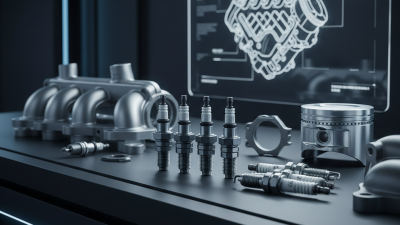
Buying Gasoline Engine Parts online can save time, but convenience should never replace careful judgment. A polished product page does not guarantee correct fit, reliable quality, or safe performance. Before ordering, identify the engine code, vehicle year, trim, and exact part number. A small mismatch can cause poor sealing, unusual noise, or expensive installation delays.
Look for sellers with verifiable business details, clear warranty terms, and responsive technical support. Compare product photos closely. Check connectors, bolt patterns, thread sizes, and included components. Read reviews for repeated comments about fitment, packaging, and long-term durability. Independent repair guides and manufacturer documentation can provide stronger evidence than promotional claims. When possible, choose genuine or reputable aftermarket parts with traceable specifications.
Details matter.
Experienced mechanics still make mistakes. A familiar-looking sensor may use a different connector. A low price may exclude seals, brackets, or shipping protection. I have learned that rushing through compatibility checks creates more work later. That lesson deserves attention. Keep screenshots of the listing, seller messages, and order details before payment. Confirm return conditions, restocking fees, delivery estimates, and inspection requirements. When the package arrives, compare the part with the old component before installation. Do not force a questionable part into place. Ask a qualified technician when specifications remain unclear. These practical checks form the foundation for the ten tips ahead, helping buyers make informed, lawful, and dependable decisions online.
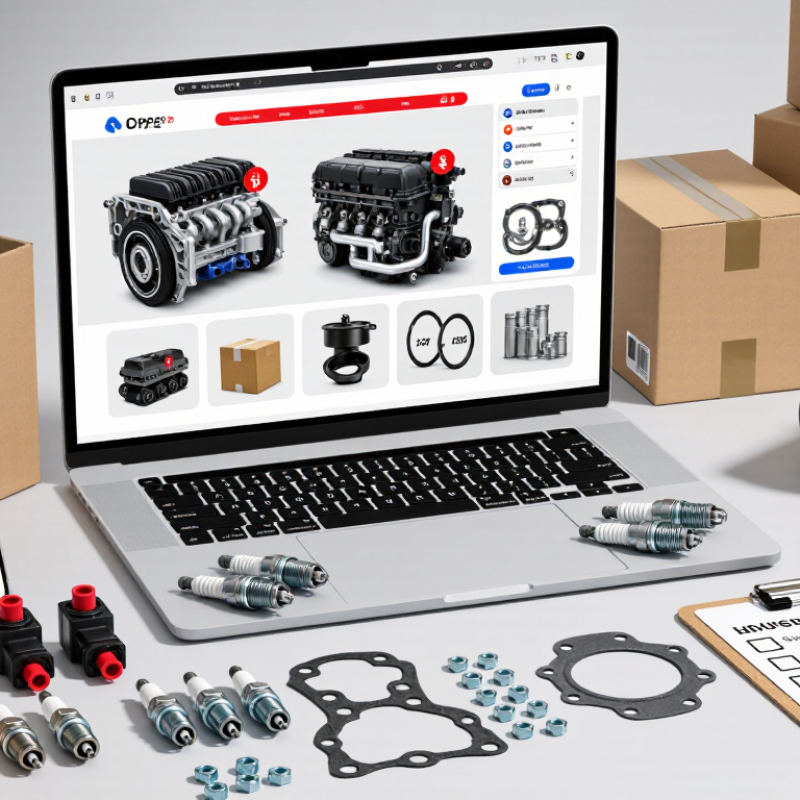
Identifying the exact gasoline engine part is the most important step before buying online. A similar-looking component can have different dimensions, connectors, or pressure ratings. Check the vehicle’s year, engine size, engine code, and transmission type. Your owner’s manual and service records can confirm these details. Do not rely on appearance alone.
Tip 1: Match the original part number. Read every digit carefully, including letters and suffixes. Tip 2: Measure the old part. Record bolt spacing, hose diameter, connector shape, and mounting position. Tip 3: Compare clear product photos from several angles. A missing sensor port or altered bracket may cause installation problems. Shortcuts often fail.
Experienced technicians also verify material, operating temperature, voltage, and fuel compatibility. Ask the seller for technical drawings or fitment data when the listing seems incomplete. Check whether the part is new, refurbished, or used, because condition affects reliability. Review the return policy before payment, especially for electrical components. I have seen buyers choose the cheapest option, then discover that shipping it back costs almost as much as the part.
Keep screenshots of the listing and your vehicle information. They can help resolve a specification dispute. If two parts still appear suitable, consult a qualified mechanic rather than guessing. A small mismatch can create leaks, warning lights, poor starting, or unsafe engine operation. But even professional advice should be checked against the manufacturer’s service information. Mistakes happen. Careful verification reduces them.
| No. | Buying Tip | Part Category | Exact Information to Confirm | Useful Technical Data | Common Compatibility Check | Online Listing Warning |
|---|---|---|---|---|---|---|
| 1 | Record the complete vehicle or engine details | All gasoline engine parts | Vehicle year, make, model, engine displacement, cylinder count, fuel system, production date, and engine identification code. | Engine displacement is normally stated in liters or cubic centimeters; for example, 2.0 L equals approximately 1,998–2,000 cm³ depending on the engine design. | The same vehicle model may use more than one engine during a single model year, so model name alone is not sufficient. | “Fits all models” without engine-year restrictions is a compatibility risk. |
| 2 | Use the original part number when available | Filters, sensors, coils, injectors, belts, and pumps | Read the number printed, stamped, or molded on the removed component and compare every character. | Part numbers may include letters, digits, revision suffixes, and regional variations. | Check whether the seller lists a direct replacement, superseded number, or only a visually similar item. | A missing or partially obscured part number makes verification difficult. |
| 3 | Match spark plug specifications, not appearance | Spark plug | Thread diameter, thread reach, seat type, heat range, electrode design, terminal style, and required gap. | Common thread diameters include 10 mm, 12 mm, 14 mm, and 18 mm; thread reach must also match the cylinder head. | Compare the specified electrode gap in the service data; many gasoline engines use a gap around 0.7–1.1 mm, but the correct value is engine-specific. | The wrong reach can cause poor combustion or mechanical contact inside the cylinder. |
| 4 | Verify filter dimensions and filtration function | Oil filter, air filter, and fuel filter | Outer diameter, height or length, mounting thread, gasket dimensions, inlet/outlet arrangement, and filter type. | A spin-on oil filter commonly has a threaded center opening and a sealing gasket; both thread and gasket diameter must match. | Panel air filters must match length, width, height, sealing edge, and housing shape; a small dimensional difference can permit unfiltered air to enter. | Do not select a filter based only on external diameter or color. |
| 5 | Confirm electrical values and connector design | Ignition coil, crankshaft sensor, oxygen sensor, and fuel injector | Connector shape, pin count, wire position, mounting points, operating voltage, resistance, and signal type. | Most passenger-vehicle electrical systems use approximately 12 V nominal battery voltage, while sensor signal ranges vary by design. | An identical connector does not always guarantee identical calibration or output characteristics. | Listings that omit connector photographs, pin count, or electrical specifications require extra verification. |
| 6 | Check injector flow and fuel-system requirements | Fuel injector | Fuel type, connector, body length, O-ring size, spray pattern, flow rate, impedance, and fuel-rail fit. | Injector flow is commonly expressed in cm³/min or lb/hr and depends on test pressure; values cannot be compared without the same pressure basis. | A higher flow rate is not automatically an upgrade and may cause an excessively rich mixture without proper calibration. | Avoid listings that provide flow rate but omit test pressure or fuel compatibility. |
| 7 | Measure belts and pulleys by tooth profile and length | Timing belt and serpentine belt | Tooth count, tooth pitch, belt width, overall length, rib count, rib profile, and routing direction. | Timing belts use a defined tooth pitch and count; serpentine belts are commonly identified by rib count and effective length. | A timing belt with the wrong tooth count can alter valve timing, while an incorrect serpentine length can cause tension or alignment problems. | Do not rely on length alone when tooth or rib geometry is different. |
| 8 | Compare operating temperature and housing design | Thermostat and coolant-temperature sensor | Opening temperature, housing diameter, gasket or seal style, sensor connector, and installation position. | Many gasoline-engine thermostats begin opening within approximately 80–105 °C, but the specified temperature varies by engine. | The thermostat opening temperature is not interchangeable simply because the part has the same outer diameter. | A listing without the opening temperature or seal information is incomplete. |
| 9 | Inspect mounting points and fluid connections | Water pump, alternator, starter motor, and fuel pump | Bolt-hole pattern, flange shape, pulley position, shaft direction, hose ports, electrical terminals, and clearance. | A component can have the correct voltage or belt type but still fail to fit because of offset, port angle, or mounting-hole spacing. | Compare the number and position of mounting holes and measure critical distances in millimeters. | Stock photographs may show a similar part rather than the exact supplied configuration. |
| 10 | Review documentation, return terms, and quantity | Any replacement component | Installation instructions, calibration requirements, included seals or hardware, warranty period, return window, and package quantity. | Some engines require one part per cylinder, such as four spark plugs or four fuel injectors in a four-cylinder engine. | Confirm whether the price covers one item, a complete set, or a repair kit. | Unclear quantity, missing return conditions, or no technical drawing increases purchase risk. |
Buying gasoline engine parts online starts with one question: will this part fit your exact vehicle and engine model?
The vehicle’s year is not enough. Check the engine code, displacement, fuel system, transmission, and production date.
Two cars with similar appearances may use different sensors, gaskets, or ignition components. Read the seller’s compatibility chart carefully, then compare it with your owner’s manual or service documentation.
Measure the old part before ordering. Record its length, mounting-hole position, connector shape, thread size, and pin count.
For filters, compare diameter and seal dimensions.
For ignition components, check the connector and operating specification, not only the product photo.
Photos can hide small differences.
A part number or technical reference can help, but confirm every character.
One wrong digit can send the wrong component to your door.
Ask the seller for written confirmation when details remain unclear. Include the engine code and a clear photo of the old part. Reliable sellers should explain fitment limits, material details, testing information, and return conditions.
I have learned that “looks identical” is weak evidence. An overlooked trim level once seemed minor, yet it changed the connector design.
Recheck before paying. A short pause is cheaper than forcing an incompatible part into a working engine.
Buying gasoline engine parts online requires more than matching a picture. Check the exact part number, engine code, model year, dimensions, and connector type. S&P Global Mobility reported that the average U.S. vehicle age reached 12.6 years in 2024. Older vehicles need careful compatibility checks. Ask for material details, tolerance data, test procedures, and batch traceability. A product page with only polished photos is weak evidence.
Seller credentials matter. Look for a verifiable business address, responsive technical support, clear warranty terms, and a practical return policy. Confirm whether the seller publishes installation guidance and provides invoices. Quality certificates can help, but they do not guarantee correct fitment. Certification is not magic. I would also compare packaging, seals, machining marks, and included hardware with the manufacturer’s specifications. My own mistake was trusting a low price before checking return costs.
Reviews need disciplined reading. A 2023 Local Consumer Review Survey reported that 98% of consumers read online reviews for local businesses. Do not trust the average score alone. Study recent reviews, verified-purchase labels, customer photos, and comments about leakage, noise, overheating, or early failure. Repeated complaints matter more than one angry comment. Watch for identical wording and sudden bursts of praise. Some reviews may be genuine but still irrelevant to your engine. Save screenshots of specifications and seller promises before ordering. Then ask one uncomfortable question: would this purchase still look safe without the five-star rating?
10 Tips for Buying Gasoline Engine Parts Online
Tip 1: Compare the complete price, not just the listing price. Add shipping, taxes, handling fees, and possible return costs. A cheaper gasket may become expensive after delivery.
Tip 2: Check shipping terms carefully. Look for processing time, estimated arrival dates, package tracking, and damage procedures. I once chose a low-cost supplier and ignored the seven-day handling delay. The part arrived after my repair schedule had changed. That mistake was avoidable. Before ordering, confirm the engine model, part number, dimensions, material, and product photographs. Ask questions when specifications seem incomplete. A professional seller should provide clear technical information and realistic delivery details.
Tip 3: Read the warranty before payment. Confirm its duration, coverage, installation requirements, and exclusions. Some warranties require proof of professional installation or regular maintenance records. Keep invoices and order messages. They may matter later. Tip 4: Study the return policy, including restocking fees, return windows, and refund timing. Check whether opened packaging affects eligibility. I have seen buyers assume every unused-looking part could be returned, but some sellers classify opened electrical components as non-returnable. That assumption can be costly. Compare customer service quality too. Fast, specific replies often reveal stronger after-sales support than polished product pages. Finally, save screenshots of the listing and terms. Online details can change.
Compare compatibility, product specifications, total cost, shipping terms, warranty coverage, and return conditions before placing an order. Confirm the exact part number and vehicle fitment, and keep all invoices and order records.
When a gasoline engine part arrives, do not install it immediately. A clean box proves little. In workshop receiving, I inspect the part under bright light and photograph every side. The NRF and Appriss Retail 2023 Consumer Returns in the Retail Industry report recorded an estimated 17.3% return rate for online purchases. That figure makes careful receiving important, especially for expensive engine components.
Check the part number, dimensions, mounting holes, connector shape, and surface finish against the vehicle’s service information. Look for cracked plastic, bent pins, damaged threads, oil residue, corrosion, or missing seals. Keep protective caps in place until the inspection ends. A sensor can appear correct but still have the wrong connector. Do not force it.
Measure critical dimensions with a caliper when possible. For rotating parts, check shaft movement and unusual play. Compare gaskets and fasteners with the old component before discarding anything. If the package is crushed, record it immediately and retain the packaging. The 2023 Automotive Aftermarket Industry Association data shows continuing demand for replacement parts as vehicles remain in service longer, but demand does not excuse weak verification. I have also learned that rushed checks miss small defects. That is an uncomfortable, preventable mistake. Store the invoice, photographs, inspection notes, and compatibility details together before installation.