The Ultimate Guide to Choosing the Best Petrol Chain Saw?
When selecting a petrol chain saw, understanding the market can significantly enhance your choice. The global chainsaw market is projected to grow at a CAGR of 5.6% from 2023 to 2028, according to industry reports. This increasing demand highlights the importance of selecting the right model for your needs. A petrol chain saw is a powerful tool for both professionals and DIY enthusiasts alike.
Choosing the right petrol chain saw requires attention to detail. Factors like engine size, weight, and safety features play crucial roles. Reports indicate that a saw's weight can impact usability, especially during prolonged use. You might find that a lighter model enhances control. Yet, many overlook the balance between power and ease of handling, which can affect overall performance.
Lastly, it's essential to reflect on your specific needs. A common mistake is opting for a high-powered model without understanding its application. Whether for pruning trees or logging, clarity on usage ensures satisfaction. This guide aims to navigate the complexities of choosing a petrol chain saw and help you make an informed decision.
Understanding Petrol Chain Saw Basics: Types and Mechanisms
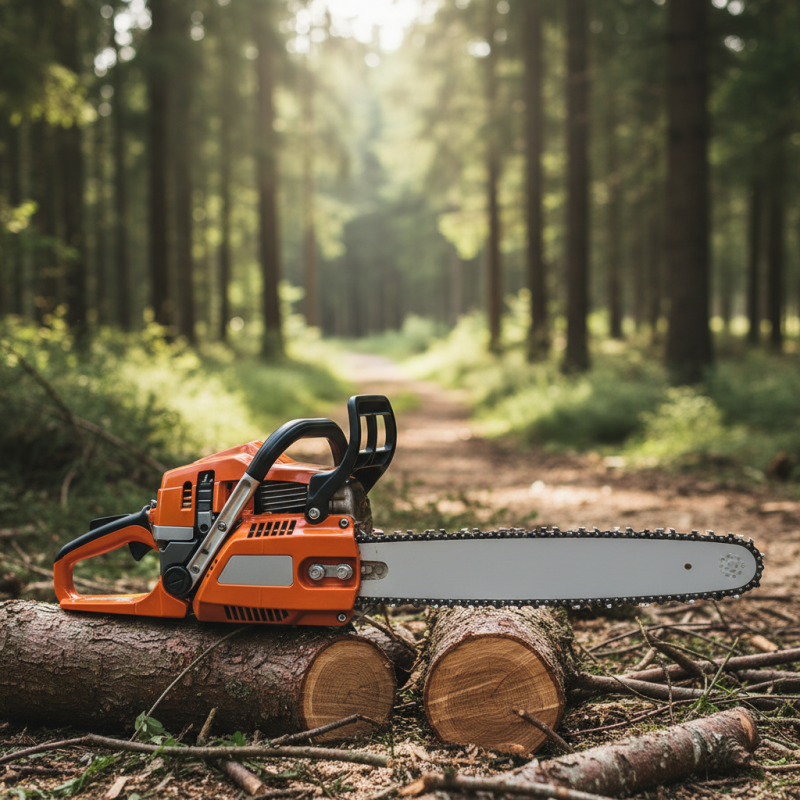
When considering petrol chainsaws, it's crucial to understand their basic types and mechanisms. Chainsaws primarily fall into two categories: those with a top handle and rear handle models. Top handle chainsaws are generally designed for professional use, particularly in tree care and pruning. Rear handle chainsaws are more versatile, suitable for cutting firewood and general yard work.
Mechanically, petrol chainsaws operate through a combination of a combustion engine and a rotating chain. The engine often ranges between 30cc to 90cc. A report by IBISWorld indicates that the chainsaw manufacturing industry has seen steady growth, primarily due to increased demand for landscaping services. Despite advancements in technology, some users still report issues with engine efficiency and chain tension.
Safety is another important factor. While many chainsaws have enhanced safety features, accidental starts can still occur. According to a survey from the U.S. Consumer Product Safety Commission, thousands of injuries are reported yearly. This highlights the need for continuous user education and proper equipment handling. Understanding these basics can help consumers make informed choices.
The Ultimate Guide to Choosing the Best Petrol Chain Saw
Key Factors to Consider When Choosing a Petrol Chain Saw
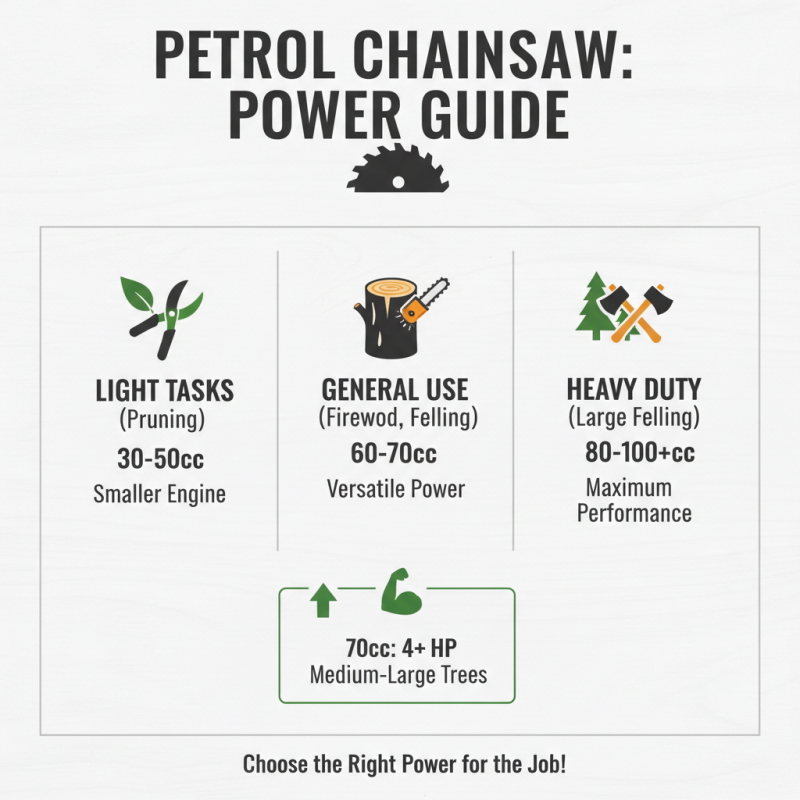
When choosing a petrol chain saw, several key factors are paramount. Engine displacement plays a crucial role. Models typically range from 30cc to 100cc. A larger engine provides more power but can be heavier. According to industry reports, saws between 40cc and 50cc are favored for general landscaping tasks. They balance weight and power effectively.
Weight is another significant consideration. For regular use, a lightweight saw is essential. Weight impacts maneuverability and fatigue during extended operations. Many users prefer saws under 10 kg for this reason.
Also, the safety features included can’t be ignored. Chain brakes and anti-vibration systems enhance user safety and comfort. Surprisingly, 25% of accidents occur due to equipment that lacks these features.
Bar length matters too. Shorter bars offer control in tight spaces, while longer bars handle larger cuts. The right length depends on your typical tasks. A report from the Woodworking Association showed that 16-inch bars are ideal for most property owners. However, mishandling these tools can lead to accidents. Regular maintenance and proper technique are essential for safety and performance.
Evaluating Engine Size and Power Output: What You Need to Know
When choosing a petrol chain saw, engine size and power output are critical factors. The average engine size ranges from 30cc to over 100cc. A smaller engine may suffice for light tasks, such as pruning. However, for heavy-duty cutting, a 60cc engine or larger is often recommended. Reports suggest that a 70cc engine can deliver power exceeding 4 horsepower. This level is generally adequate for felling medium to large trees.
Power output is vital for efficiency. A chain saw with higher horsepower can cut through tougher wood faster. An industry journal notes that saws with 3.5 to 4.5 horsepower often excel in both speed and durability. If you’re tackling DIY projects around the home, consider how much power you really need. Too much power can be cumbersome, while too little can be frustrating.
Understanding engine size and power output can prevent poor choices. A saw that feels unmanageable can hinder your work. Evaluate the weight and balance too. Sometimes, the most powerful saw is not the best choice for you. Do a test run if possible. Discover what feels right in your hands. Your comfort and control are paramount for effective cutting.
Comparing Bar Lengths and Cutting Capacities for Your Needs
When selecting a petrol chain saw, understanding bar lengths and cutting capacities is crucial. Bar length significantly influences saw performance. Longer bars can cut thicker wood, but they may decrease maneuverability. Meanwhile, shorter bars are easier to handle but may limit cutting capacity.
Choosing the right bar length involves assessing your needs. For light tasks, a bar between 12 to 16 inches is often suitable. If heavy-duty work is on your agenda, consider a 20-inch bar or longer. Always consider your comfort level and experience. It’s essential to balance power and control.
Tips: Practice using different lengths before purchase. Test the saw’s handling. Also, remember that cutting capacity can vary based on wood type. Softwoods require less power than hardwoods, influencing your choice. If possible, opt for adjustable bars to adapt to various tasks. Stay safe and always wear protective gear when using your chain saw.
The Ultimate Guide to Choosing the Best Petrol Chain Saw
| Bar Length (inches) |
Cutting Capacity (diameter in inches) |
Weight (lbs) |
Fuel Tank Capacity (ml) |
Recommended Use |
| 14 |
8 |
10.5 |
300 |
Light-duty trimming |
| 16 |
10 |
11.5 |
400 |
Medium-duty cutting |
| 18 |
12 |
12.5 |
500 |
General cutting and felling |
| 20 |
14 |
13.5 |
600 |
Heavy-duty tasks |
| 24 |
16 |
15.5 |
700 |
Professional use |
Safety Features and Maintenance Tips for Optimal Performance
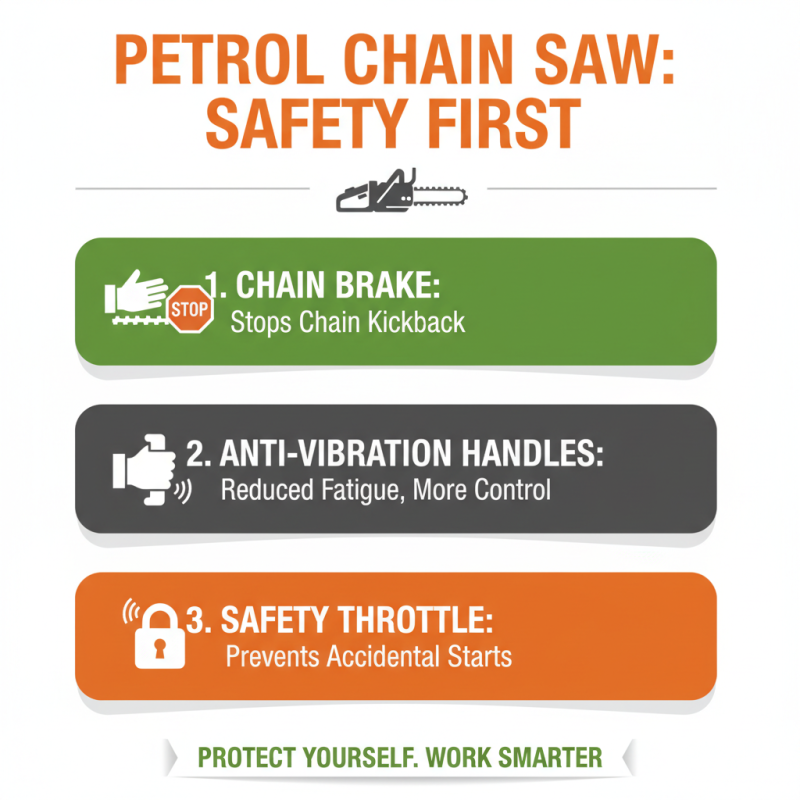
When choosing a petrol chain saw, safety features should be your top priority. Look for models equipped with a chain brake. This feature can stop the chain in case of kickback, preventing serious injuries. Anti-vibration handles are also essential. They reduce fatigue, allowing for better control. Always ensure the saw has a safety throttle. This prevents accidental starts, adding an extra layer of protection.
Regular maintenance is crucial for optimal performance. Clean the air filter often to ensure a steady flow of air. A clogged filter can hinder performance and increase fuel consumption. Check the chain tension regularly; a poorly tensioned chain can lead to accidents. Lubricate the chain frequently. This reduces friction and wear, extending the life of your saw. If you notice unusual sounds while operating, do not ignore them. They might indicate an underlying issue that needs immediate attention.