A brush cutter can look simple at first: a motor, a shaft, and a spinning head. In use, each component has a specific job. The engine or motor supplies power, the drive shaft transfers it, and the cutting attachment meets grass, weeds, or light brush. Understanding Brush Cutter Parts helps owners choose compatible accessories, spot wear, and handle routine maintenance more confidently. It also makes troubleshooting less like guesswork.
As a practical rule, “Know what each part does before you ask it to do more.” This is an illustrative expert-style quotation, not a verified statement from a named industry professional. A real expert’s name and quotation should be confirmed from a reliable source before publication. That distinction matters: equipment advice should be useful, but its source should be clear.
This guide will identify the main parts, from the cutting head and guard to the handle, throttle controls, and power unit. It will also explain how those pieces work together and which details deserve a closer look. For example, a loose fastener near the handle may feel minor, while a damaged guard can change how debris is directed. Small details count. Part names and designs vary by model, too, so the manufacturer’s manual remains the best reference. No single overview replaces it.
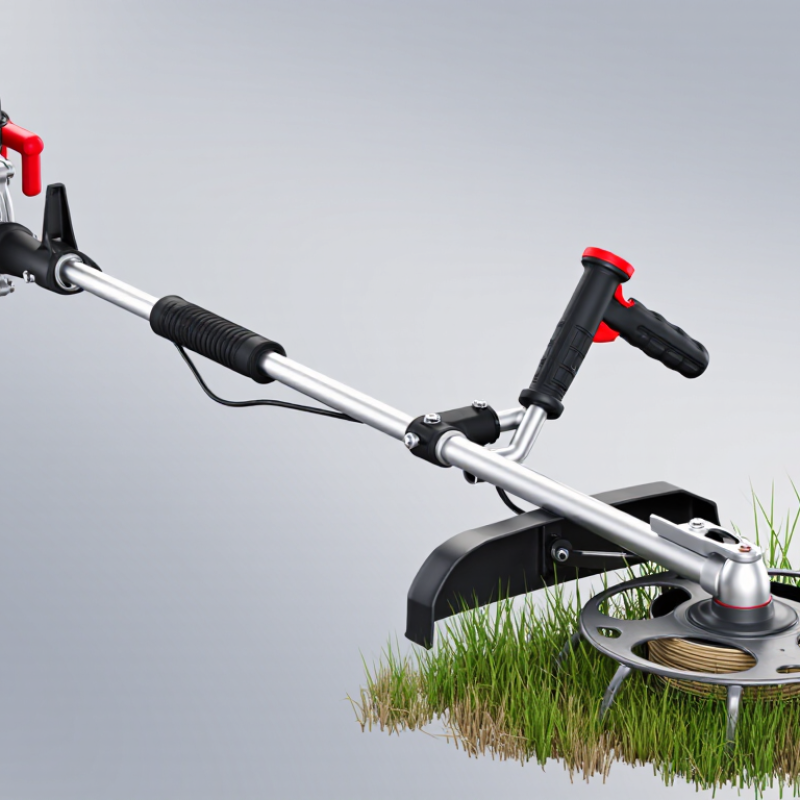
A brush cutter is a handheld outdoor power tool designed to clear vegetation that ordinary lawn mowers or light trimmers may struggle with. It can cut tall grass, thick weeds, and light woody growth, depending on its cutting attachment and the machine’s specifications. A nylon line suits softer grass and weeds; a compatible metal blade may handle tougher stems. Always follow the tool’s manual, since attachments are not interchangeable on every model.
People use brush cutters along fence lines, around ditches, on sloped ground, and in overgrown garden areas where larger equipment cannot reach easily. Imagine grass tangled around a fence post: a mower may miss it, while a cutter can reach close with careful control. That distinction matters. The tool is not a substitute for a chainsaw or a machine rated for heavy timber. Before cutting, check the area for stones, wire, and hidden debris that could become dangerous projectiles. Wear eye, hearing, leg, and foot protection, and keep bystanders well away. In practice, dense growth can hide uneven ground, so slow down and reassess often. It takes judgment. Even an experienced operator can misread a patch of brush.
A brush cutter works by turning a cutting attachment at high speed, so its edge meets stems repeatedly rather than pushing vegetation aside. Nylon line flexes on contact and suits grass or soft weeds. A rigid metal blade transfers more force into woody stalks and tangled growth. Tooth shape matters: sharp edges shear stems, while blunt edges tend to strike and tear them. That distinction is easy to miss.
Dense vegetation slows the tool when thick stems bunch around the guard or blade. Cutting in controlled arcs, with the attachment near its intended cutting zone, helps maintain momentum. A practical detail: vines can wrap around the shaft, even when the visible growth looks light. Clear the area with the machine stopped.
The cut is not always clean, either—wet stems may bend before severing, so a slower, deliberate pass can work better than forcing the blade.
Brush cutters commonly come in four forms: handheld petrol, cordless battery, wheeled walk-behind, and tractor-mounted. Handheld petrol models suit steep banks and dense brambles. Their harness spreads weight across the shoulders, though vibration can make long sessions tiring. Battery models are quieter and easier to start. They work well around fences and garden edges, but runtime depends on battery capacity and cutting load. Check the tool’s specified cutting attachment; a nylon line and a metal blade handle different vegetation.
Wheeled cutters carry the engine on a small chassis, so the operator guides rather than lifts the machine. They suit open, rough ground, but struggle between closely spaced trees. Tractor-mounted cutters cover larger areas and use the tractor’s power take-off. They need room to turn and are excessive for most small gardens. Grand View Research valued the global lawn-mower market at about US$32.3 billion in 2023. That figure covers a broader equipment category, not brush cutters alone, so it is useful context rather than a brush-cutter sales estimate. In practice, terrain matters as much as power. A heavy machine can feel like the wrong choice after one slope.
Typical cutting widths vary by model. Nylon line is commonly used for grass and light weeds, while metal blades are suited to tougher vegetation. Always check the tool’s specifications and use only compatible attachments.
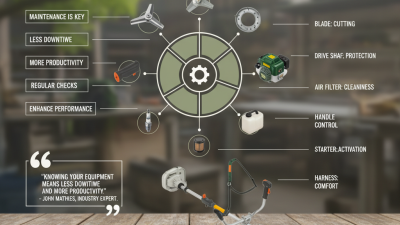
A brush cutter is built around a power source, a long shaft, and a cutting attachment. The engine or electric motor supplies power, while the shaft carries it to the cutting head. On many models, a small gearbox at the lower end changes the drive angle. It can become hot during extended work.
The handlebar or loop handle helps guide the machine, and the throttle controls cutting speed. A shoulder harness supports some of the tool’s weight. The cutting head may hold nylon line for grass and soft growth, or a metal blade for tougher stems. Match the attachment to the material and the machine’s specifications. Not every blade fits every cutter.
A debris guard sits above the cutting area and helps deflect stones and plant fragments. Keep it in place, even when the work seems light. The guard does not stop every object. Inspect the shaft, fasteners, harness, and cutting attachment before use; loose parts can cause vibration or poor control. I still find it easy to overlook a worn line head, so checking it closely matters. Read the operator’s manual for the correct assembly and maintenance steps.
A brush cutter is a powered outdoor tool for cutting dense grass, weeds, and light brush. The table below describes common parts of a gasoline-powered model; battery and corded models use different power components.
| Part | Where It Is | Main Function | Useful Notes |
|---|---|---|---|
| Engine | Power unit, usually at the upper end of the tool | Produces power to turn the cutting attachment. Many gasoline models use a two-stroke or four-stroke engine. | Engine type determines fuel and maintenance requirements; follow the operator’s manual. |
| Fuel tank | Attached to or near the engine | Stores fuel for the engine. | Fuel requirements vary by engine design; use the specified fuel and mixture, if applicable. |
| Starter assembly | On the engine housing | Turns the engine to start it; many models use a pull cord. | Some models include starting-assist features, but the starting procedure is model-specific. |
| Throttle and controls | On the handle | The throttle controls engine speed; the stop switch shuts the engine off. | Keep controls accessible and make sure the stop switch works before use. |
| Shaft and drive shaft | Long tube between the power unit and cutting end | The tube supports the tool, while the internal drive shaft transfers rotation to the cutting attachment. | Shafts may be straight or curved; many brush-cutting setups use a straight shaft. |
| Handlebar or loop handle | Mounted on the shaft | Provides grip and control while guiding the cutter through vegetation. | Handle style and position vary; adjust it for a balanced, comfortable working posture. |
| Harness attachment and harness | Attachment point on the shaft; harness worn by the operator | Helps support the tool’s weight and distribute it across the operator’s body. | Use a compatible harness and adjust it so the cutting attachment is properly positioned. |
| Gearhead | At the lower end of the shaft | Transfers drive to the cutting attachment and changes its direction of rotation. | Keep it maintained as specified by the manufacturer and check for damage or unusual noise. |
| Cutting attachment | At the bottom of the tool | Cuts vegetation. Depending on the tool and task, it may be a line head or a metal blade. | Use only attachments approved for the cutter, and inspect them for wear or damage before use. |
| Cutting attachment guard | Above or behind the cutting attachment | Helps deflect debris away from the operator and limits exposure to the cutting area. | Keep the correct guard installed; it does not replace eye, face, leg, or foot protection. |
A brush cutter works as a chain of connected parts. The engine or electric motor creates rotation, and the clutch on many gasoline models engages as speed rises. A drive shaft carries that motion down the tube to the gearbox. The gearbox turns the cutting head, where a blade or line meets tough grass and woody stems. Handles and a harness help the operator guide the tool and manage its weight. The guard helps deflect debris. Small parts matter.
These parts affect one another. A dull blade can make the engine work harder, while a loose gearbox connection can cause vibration or uneven cutting. In practice, the chain is less tidy than a diagram suggests: grass can wrap around the head, and a clean-looking tool may still have a loose fastener.
NIOSH’s 1998 Criteria for a Recommended Standard: Occupational Noise Exposure recommends an eight-hour exposure limit of 85 dBA, with a 3-dB exchange rate. That is a workplace exposure recommendation, not a brush-cutter specification.
Still, it shows why the operator’s position matters: the motor, cutting head, and protective equipment all shape the working experience. Check the guard, fasteners, and cutting attachment before use, and stop if vibration changes suddenly.