10 Best Brush Cutter Parts for Global Buyers?

Choosing reliable Brush Cutter Parts is no longer a simple price comparison. Global buyers now examine compatibility, material quality, service life, and supply reliability. A mismatched clutch drum can cause vibration. A weak nylon line may break beside dense grass. Small details matter.

Industry reports from Grand View Research and Research and Markets show continued demand for outdoor power equipment, driven by landscaping, agriculture, and municipal maintenance. However, most reports measure complete machines, not individual replacement parts. This gap deserves attention. It makes part-level comparison more difficult, especially across brands, regions, and engine systems. Buyers must read specifications carefully instead of trusting attractive product photos.

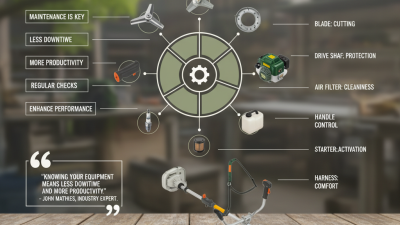
Kris Kiser, president and CEO of the Outdoor Power Equipment Institute, has stated, “Outdoor power equipment is a part of everyday life for millions of Americans.” His observation also reflects a broader global reality. Brush cutters work in farms, roadside projects, gardens, and demanding commercial sites. Their performance depends heavily on components such as trimmer heads, drive shafts, air filters, blades, gearboxes, and harnesses.

This guide reviews ten Brush Cutter Parts for international buyers. It considers fit, durability, maintenance needs, supplier transparency, and practical operating conditions. Laboratory claims are useful, but field experience can reveal more. Dust changes filter performance. Humidity affects storage. Shipping damage happens.

No part is perfect.

The strongest choice may not be the cheapest one. It should deliver dependable operation, clear specifications, replacement support, and reasonable long-term value.
10 Best Brush Cutter Parts for Global Buyers?

Brush Cutter Parts: Functions, Types, and Selection Basics

10 Best Brush Cutter Parts for Global Buyers?

Brush cutter parts determine cutting power, safety, and service life. The main system includes the engine, drive shaft, clutch, gearbox, cutting head, blade, guard, harness, air filter, and spark plug. Each part has a specific job. The gearbox transfers engine force to the blade. The guard controls flying debris. A balanced harness reduces shoulder strain during long work.

Selection should begin with the machine’s model, shaft size, mounting pattern, and engine specification. Do not choose a blade by appearance alone. An incompatible blade can create vibration, heat, or poor cutting control. The International Organization for Standardization’s ISO 11806-1 safety standard emphasizes protective guards, operating controls, and correct attachment use. These details matter in wet grass, dense weeds, and uneven ground.

Market data also shows why replacement knowledge matters. Grand View Research estimates that the global outdoor power equipment market reached more than 25 billion U.S. dollars in recent reporting, with continued growth expected through the decade. This growth increases demand for compatible maintenance parts, not just complete machines. Field experience suggests air filters and cutting lines often need earlier replacement than owners expect. That assumption is not perfect. Dust, fuel quality, storage, and working hours change the interval. Buyers should compare material thickness, heat resistance, service records, and supplier documentation before ordering. Superb packaging cannot correct a wrong specification.

Ten Essential Brush Cutter Parts for Different Cutting Needs

Brush cutters work best when their parts match the cutting task. The cutting head handles light grass and soft weeds. Nylon line protects edges near fences and trees. A metal blade suits dense weeds, reeds, and thin brush. The blade guard controls flying debris. A shoulder harness improves balance during long sessions. It also reduces wrist strain, although poor adjustment can make fatigue worse.

The engine depends on several small parts. A spark plug supports reliable ignition. An air filter keeps dust away from the engine. A fuel filter blocks sediment from reaching the carburetor. The starter assembly must pull smoothly, especially after storage. The clutch transfers power without sudden engagement. The gearbox changes engine speed into usable cutting force. Grand View Research’s 2024 outdoor power equipment analysis projects steady market growth through 2030, driven partly by demand for efficient handheld equipment. That trend makes serviceable replacement parts increasingly important.

Selection still requires judgment. A thick blade on wet grass may overload the gearbox. A narrow nylon line may break against dry stems. The U.S. Environmental Protection Agency identifies small-engine emissions as a continuing air-quality concern, so correct tuning matters. In practice, I inspect the guard, line, filter, and spark plug before each demanding job. I once ignored a worn clutch. The machine still ran, but vibration increased. That mistake showed an uncomfortable truth: cheaper parts can create higher repair costs. Always match dimensions, shaft fittings, and safety requirements with the cutter’s manual.

10 Best Brush Cutter Parts for Global Buyers? - Ten Essential Brush Cutter Parts for Different Cutting Needs

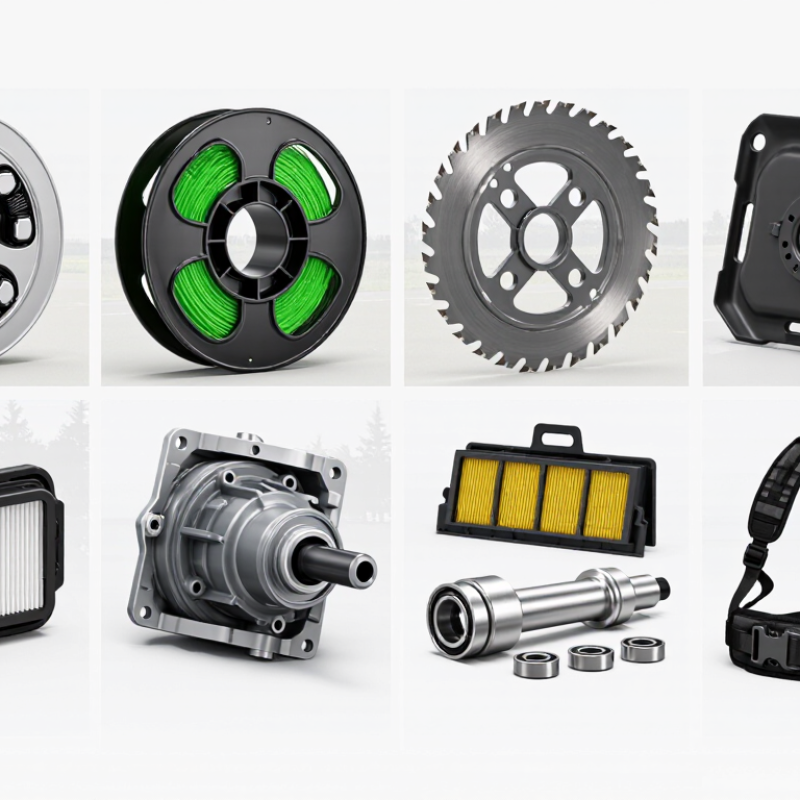
No. Essential Part Primary Cutting Need Common Specification or Size Typical Material Recommended Use Important Selection Consideration
1 Nylon Trimmer Line Grass, lawn edges, and soft weeds Round, square, or twisted line; approximately 1.6–3.3 mm diameter Nylon or copolymer nylon Best for light trimming; reduces the risk of damaging walls, trees, and garden borders Match the line diameter to the cutting head and engine power. Thicker line generally requires more power.
2 Bump-Feed Trimmer Head Frequent grass trimming and line replacement Usually accepts two line ends; common thread sizes include M8, M10, and M12 depending on the machine Impact-resistant polymer with a metal insert Best for quick line feeding during continuous lawn and field work Check spindle thread direction, thread size, maximum line diameter, and head rotation direction before purchase.
3 Three-Tooth Grass Blade Tall grass, dense weeds, and light brush Commonly 230–255 mm diameter with a 20 or 25.4 mm center bore Heat-treated carbon or alloy steel Best for medium vegetation where nylon line wears too quickly Verify blade diameter, center-hole size, rotation direction, and the machine’s approved blade rating.
4 Eight-Tooth Brush Blade Thick weeds, reeds, dry grass, and light woody growth Often 230–255 mm diameter; bore sizes commonly include 20 or 25.4 mm Hardened steel Best for heavier vegetation requiring more aggressive cutting than a three-tooth blade Use only with a compatible blade guard and a brush cutter designed for metal blades.
5 Circular Saw Blade Young woody stems, saplings, and dense brush Commonly 200–255 mm diameter with carbide-tipped or steel teeth Hardened steel; some versions use carbide-tipped teeth Best for woody vegetation when used by trained operators under controlled conditions Confirm the permitted blade type, maximum diameter, arbor size, guard arrangement, and engine power.
6 Cutting Blade Guard Operator protection from cut material and broken line Designed for a specific cutting head or blade diameter; may include a line-cutting knife High-impact plastic with metal fasteners Best for safer trimming by helping contain debris and maintain the correct cutting zone Never operate a metal blade without the guard specified for that cutting system. Check for cracks and secure mounting.
7 Flexible or Rigid Drive Shaft Transmitting engine power to the cutting head Flexible shafts may use square, splined, or star-shaped inner cables; rigid shafts commonly use splined drive components Hardened steel cable or steel shaft inside a protective tube Best for restoring power transfer when the shaft is bent, worn, or damaged Match overall length, inner cable profile, outer tube diameter, clutch connection, and gear-head connection.
8 Clutch Drum and Bearing Transferring engine rotation to the drive shaft Dimensions vary by engine displacement and clutch design; bearing sizes must match the drum assembly Machined steel drum with sealed ball bearing Best for correcting slipping or noisy power transmission Inspect the drum surface, bearing play, needle bearing, and clutch engagement before replacing individual components.
9 Bevel Gear Head Assembly Changing the drive direction and supporting the cutting attachment Common tube diameters include approximately 24–28 mm; gear ratios vary by design Aluminum alloy housing with hardened steel gears Best for replacing worn-angle-drive components in the lower cutting assembly Check tube diameter, drive-shaft profile, mounting holes, spindle thread, gear ratio, and lubrication requirements.
10 Air Filter Filtering dust before it enters the engine Foam or pleated filter element; dimensions depend on the air-box design Washable foam or treated paper Best for maintaining engine airflow in dusty grassland and brush-cutting environments Use the correct shape and sealing edge. Clean reusable foam filters regularly and replace damaged or deformed elements.

How to Check Compatibility Across Global Brush Cutter Models

10 Best Brush Cutter Parts for Global Buyers?
How to Check Compatibility Across Global Brush Cutter Models

Buying brush cutter parts across borders requires more than matching a product photo. The ten commonly replaced parts include cutting heads, blades, nylon line, guards, drive shafts, clutch drums, carburetors, air filters, spark plugs, and harnesses. Check the exact model code, engine size, production year, and serial range before ordering. Small differences matter. A shaft may look identical but use another spline count or diameter.

Measure the old part when possible. Record thread direction, mounting hole spacing, blade bore, shaft length, and connector shape. For fuel components, compare hose positions and gasket sizes. For electrical parts, confirm voltage, plug layout, and wire length. Use millimeters, not visual estimates. A manual or service diagram is more reliable than a marketplace description. I have found that seller measurements sometimes contain errors, so request clear photos and written dimensions.

Global models may use different safety guards or fastening systems. Do not remove a guard merely to make a part fit. Check local operating requirements and the machine’s original design. Ask about return conditions, customs documents, and replacement seals before payment. One overlooked detail can waste weeks. My own checking process is not perfect; I once trusted a matching engine size and missed the shaft profile. That mistake changed how I inspect every part now.

10 Best Brush Cutter Parts for Global Buyers

How to Check Compatibility Across Global Brush Cutter Models

The chart compares the number of core compatibility checkpoints commonly required for each replacement part. Before purchasing, confirm the dimensions, mounting method, drive system, thread or bore size, and the manufacturer’s technical specifications for the specific brush cutter model.

Material Quality, Safety Standards, and Supplier Considerations

10 Best Brush Cutter Parts for Global Buyers?

Material quality and safety standards should guide every brush cutter parts purchase. The ten essential parts include cutting blades, trimmer heads, guards, drive shafts, gearboxes, clutches, air filters, spark plugs, handles, and harnesses. Blades need properly heat-treated steel, while trimmer heads require durable nylon and accurate thread fitting. Shafts should resist twisting under load. Small defects matter.

In field inspections, I check welds, edge consistency, vibration, and corrosion marks before discussing price. A bright finish can mislead buyers. It does not prove strength. Suppliers should provide material specifications, dimensional drawings, batch records, and test reports. Safety guards must fit securely and withstand impact testing. Handles and harnesses need ergonomic adjustment, especially for long working periods. Buyers should also confirm compatibility with local equipment and applicable machinery safety requirements. Standards vary by market, so suppliers must explain their compliance evidence clearly. Some documentation is incomplete. That deserves careful questioning.

Tips: Request samples from the same production batch. Measure shaft diameter, thread direction, guard spacing, and mounting holes. Test parts under controlled conditions, not only by appearance. Ask about replacement availability, packaging protection, inspection procedures, and warranty handling. A reliable supplier welcomes these questions and accepts reasonable quality checks.

Maintenance, Replacement Timing, and International Buying Tips

10 Best Brush Cutter Parts for Global Buyers

A reliable brush cutter depends on ten practical parts: cutting blade, nylon line head, drive shaft, clutch, gearbox, air filter, spark plug, fuel filter, recoil starter, and harness. In field maintenance, I inspect the blade and line head after every job. Bent blades, cracked guards, or uneven line feed should not wait. Clean grass from the gearbox area, then check for unusual heat or noise.

A dirty air filter can reduce power quickly, especially in dusty fields. Replace it when cleaning no longer restores airflow. Spark plugs often need replacement after repeated hard starting, though poor fuel can confuse the diagnosis.

Replacement timing depends on workload, soil conditions, and storage. A commercial user may change nylon line weekly, while a homeowner may need it monthly. Blades require replacement when sharpening leaves thin edges or visible cracks. Fuel filters and spark plugs deserve seasonal inspection. Drive shafts and clutches need attention when vibration increases. I once delayed a clutch inspection, and the repair became more expensive than the part. That mistake still influences my maintenance schedule.

Tips for international buyers:

Confirm the exact model, shaft size, tooth pattern, thread direction, and engine specification. Request clear measurements and photographs before ordering. Check whether the package includes washers, nuts, seals, or mounting tools. Choose suppliers with traceable material information and practical testing records. Compare shipping weight, customs documents, lead time, and return conditions. Do not assume a universal part fits every machine. It often does not. Keep one spare air filter and one cutting head before peak season.

  • facebook
  • linkedin
  • twitter
  • youtube