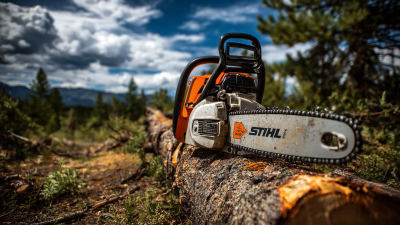
How to Choose the Best Ms880 Chainsaw for Your Needs?
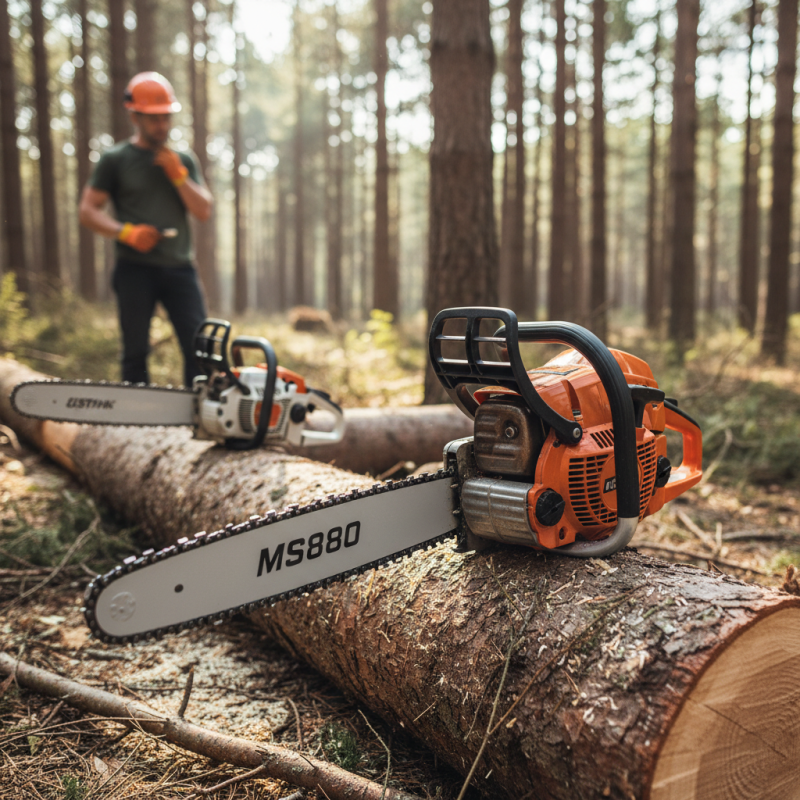
Choosing the right tools for your projects is essential. The Ms880 Chainsaw is a powerful option for serious woodworking tasks. It offers excellent performance and durability, making it a popular choice among professionals.
However, not everyone may need its full capabilities. It’s vital to assess your specific requirements. Think about your projects. Is it occasional yard work or heavy-duty logging? The Ms880 Chainsaw may be too much for simple tasks. Understanding what you need will guide your decision.
Consider factors like weight, cutting capacity, and ease of use. Many users find handling heavy equipment daunting. The Ms880 Chainsaw, while robust, comes with a learning curve. Evaluate your comfort level with such machinery. Making the right choice ensures efficiency and safety in your projects.
Understanding the Key Features of the MS880 Chainsaw
When choosing the best chainsaw, understanding key features is essential. The MS880 chainsaw stands out for its powerful engine, designed for heavy-duty tasks. With a displacement of 121.6cc, it delivers impressive cutting performance, ideal for felling large trees or milling lumber. According to industry reports, chainsaws with higher engine displacement offer more torque, leading to faster cuts and improved efficiency.
Another critical feature is the guide bar length. The MS880 typically comes with a bar ranging from 36 to 59 inches. A longer bar allows for deeper cuts but can be unwieldy for less experienced users. Research shows that a balanced chainsaw with the right bar length enhances control and reduces user fatigue. Users need to assess their skill level and workload when selecting the appropriate bar size.
Lastly, weight plays a significant role in usability. While a powerful engine is appealing, the overall weight can affect handling. Experts suggest that a chainsaw should feel manageable for extended use. Users often underestimate the fatigue caused by heavyweight models, leading to decreased performance and safety risks. Reflecting on personal comfort and handling during operation is vital in making the right choice.
Comparison of Key Features of the MS880 Chainsaw
Assessing Engine Power and Performance Specifications
When evaluating a chainsaw, engine power and performance specifications are crucial. A chainsaw’s engine power is often described in cubic centimeters (cc). For optimal performance, consider models with an engine size ranging from 50cc to 80cc. Research shows that 60cc engines provide a balance between weight and power, ideal for both homeowners and professionals.
Another important factor is the torque delivered by the engine. High torque helps in cutting through dense wood more easily. A study indicated that chainsaws with over 3.5 Nm of torque perform significantly better in tougher conditions. Also, the power-to-weight ratio is key. Tools with a ratio of 1.4 kg per horsepower are easier to manage, especially for prolonged use.
But, don’t forget to consider fuel efficiency. Some powerful chainsaws can be fuel guzzlers, impacting long-term operating costs. Analyze fuel consumption data where models show differences in efficiency ratings. An inefficient model may seem appealing at first, but it could prove costly over time.
Pay attention to vibration levels, as well. Chainsaws generate substantial vibrations that can affect comfort and control. Look for ones with vibration dampening systems. These features may not always be present in all models. Ignoring them can lead to fatigue and less precision in cutting tasks.
How to Choose the Best Ms880 Chainsaw for Your Needs? - Assessing Engine Power and Performance Specifications
| Model |
Engine Power (HP) |
Bar Length (inches) |
Weight (lbs) |
Fuel Capacity (oz) |
Oil Capacity (oz) |
Chain Speed (FT/S) |
| Ms880 Standard |
6.7 |
36 |
14.5 |
20 |
10 |
40 |
| Ms880 Heavy Duty |
7.2 |
30 |
15.5 |
22 |
11 |
45 |
| Ms880 Pro |
7.5 |
28 |
13.8 |
24 |
9 |
48 |
| Ms880 Woodcutter |
6.5 |
32 |
14.0 |
18 |
10.5 |
42 |
Evaluating Weight and Ergonomics for User Comfort
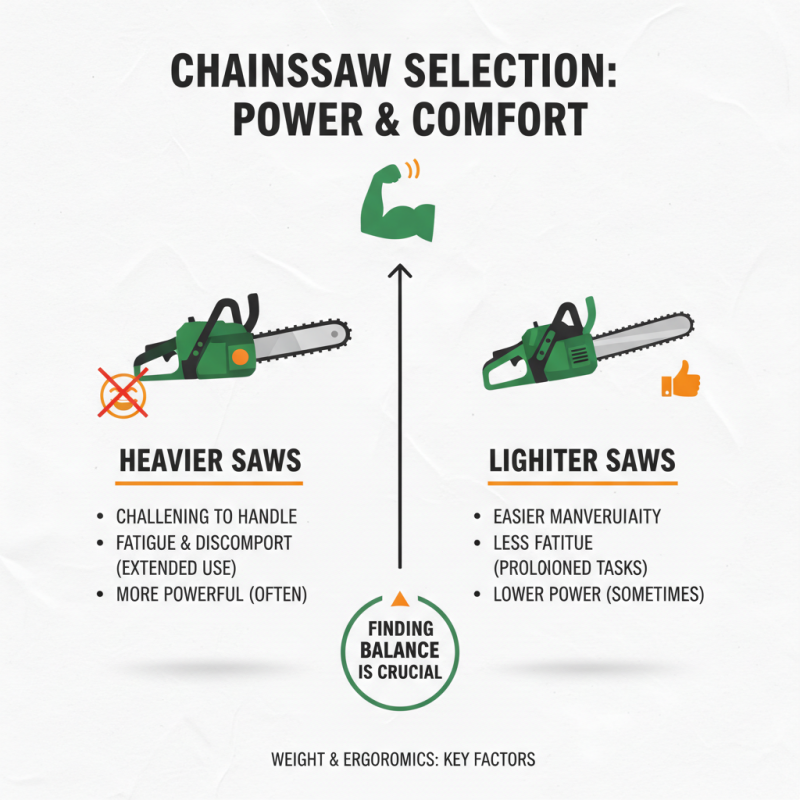
When selecting a chainsaw, weight and ergonomics are key factors. A heavy chainsaw can be challenging to handle over time. Users may experience fatigue or discomfort during extended use. Finding a balance between power and weight is crucial. Lighter models can be easier to maneuver, especially for prolonged tasks. However, some lighter options may not deliver the same performance.
Ergonomics also play a significant role. A well-designed handle can prevent strain on your hands and wrists. Consider the grip and how it feels during operation. An uncomfortable grip could lead to long-term injuries. Test the chainsaw, if possible. Hold it and see how it feels for you. Some might find a more compact design fits better in their hands, while others might prefer a wider stance.
When estimating the right choice, think about your typical tasks. Are you cutting down large trees or trimming branches? This will impact your decision. Sometimes, less is more. A lightweight, ergonomic model might outperform a bulkier one in user comfort. Prioritize your needs and test different options before making a choice.
Comparing Bar Length Options for Different Cutting Needs
When choosing a chainsaw, bar length is crucial. The size impacts cutting efficiency and control. A longer bar allows for deeper cuts but can be harder to maneuver. This can be challenging for beginners or those with limited strength. Opting for longer bars might seem appealing, yet they require more skill and practice.
Consider your cutting needs. For small tasks, like trimming branches, a shorter bar works well. It offers precision and is easier to handle. However, if you're tackling larger trees or extensive lumber work, a medium to long bar might be necessary. The trade-off is the weight and bulkiness that may make your work more tiring.
Some users overlook this factor and regret their choice later. Think about the types of jobs you plan to do. Evaluate whether you need versatility or raw power. Each person's experience can vary significantly based on their setup. Reflect on what feels comfortable in your hands, rather than following trends. A careful consideration of bar length will help you find the right tool for your tasks.
Analyzing Maintenance Requirements and Durability Factors
Choosing the right chainsaw goes beyond just picking a model. Maintenance is crucial. Neglecting it can lead to decreased performance and a shorter lifespan. Regularly cleaning the air filter can increase efficiency by up to 20%. Lubrication keeps the chainsaw running smoothly and reduces wear.
Durability is another key factor. Materials used in the construction largely impact longevity. For instance, magnesium alloy bodies provide lighter weight and better durability against impacts. A report by the Forestry Equipment Association highlighted that well-maintained models can last up to 10 years, while poorly maintained ones may fail within two.
Tips: Always check the chain tension before use. A loose chain can lead to accidents and premature wear. Additionally, store your chainsaw in a dry environment to prevent rust. Moisture can damage internal components, leading to costly repairs. Take time to reflect on your usage habits to improve your chainsaw's longevity.